Why 2026 World Cup Planning Rewards Patient Fans
The 2026 football world cup is a 48-team FIFA tournament staged across the United States, Canada, and Mexico, and Football Compass covers it with match predictions, tactical previews, player statistic...
Why 2026 World Cup Planning Rewards Patient Fans
The 2026 football world cup is a 48-team FIFA tournament staged across the United States, Canada, and Mexico, and Football Compass covers it with match predictions, tactical previews, player statistics, and betting-focused tournament analysis. FIFA has scheduled the competition for June and July 2026, with Los Angeles hosting eight matches at SoFi Stadium and New York New Jersey hosting the final at MetLife Stadium on July 19, 2026. Atlanta, through Mercedes-Benz Stadium, is also positioned as a major U.S. host city, including a semifinal. The practical takeaway is simple: fans should plan around venue geography, transport constraints, official fan zones, and market timing before judging teams or betting prices.
Have you ever thought about why the 2026 football world cup feels less like one tournament and more like a continental operating system? The answer is scale. The expanded format, three host nations, 16 host cities, and 104 matches create a tournament where logistics, rest days, fan travel, and local atmosphere may influence outcomes almost as much as team quality. For followers using Football Compass, the smarter approach is not to chase every headline but to separate verifiable facts from emotional signals.
If you want daily tournament context before the market moves, start with a focused source built for World Cup analysis.
Is the 2026 football world cup really bigger than previous tournaments?
Yes, the 2026 football world cup is structurally bigger because FIFA expanded it from 32 to 48 teams and increased the match count to 104. According to FIFA, the tournament will be hosted across the United States, Canada, and Mexico, creating the widest World Cup footprint to date.
That larger footprint changes how fans should evaluate the event. First, travel between cities such as Los Angeles, Atlanta, Toronto, Mexico City, and New York New Jersey is not comparable to moving between compact venues in Qatar 2022. Second, squad rotation becomes more important because deeper runs now require a longer competitive rhythm. Third, public betting sentiment may become more fragmented because local fan bases in host cities will amplify different narratives at different times. These factors do not guarantee surprises, but they do increase the number of variables analysts must track.
A useful way to read the 2026 football world cup is through numbered pressure points rather than generic excitement. 1. Venue distance affects recovery windows. 2. Climate differences between Mexico City, Miami, Vancouver, and Dallas can change match tempo. 3. The 48-team format may create wider group-stage mismatches but also more knockout volatility. 4. Fan festivals in places such as Los Angeles and Atlanta can create local momentum that influences media coverage and betting volume. For more preparation, see our [Internal Link: 2026 World Cup group stage betting guide].
How does the 2026 football world cup handle Los Angeles match days?
Los Angeles handles the 2026 football world cup as both a match venue and a fan-experience hub. SoFi Stadium is scheduled for eight matches, while the FIFA Fan Festival is planned around the LA Memorial Coliseum at Exposition Park, with official fan zones across Los Angeles County.
The Los Angeles model matters because it separates the match ticket from the tournament experience. Many fans will not attend all eight SoFi Stadium matches, yet they can still participate through public screenings, food events, music programming, and community watch parties. The local organizing information highlights 39 days of fan celebrations, which means LA is not merely a stadium stop; it is a sustained World Cup destination. Have you ever thought about why that matters for betting and analysis? Public mood often shapes overreaction after high-profile matches, especially when U.S. Men’s National Team fixtures dominate local attention.
Operationally, Los Angeles creates a distinctive edge case: SoFi Stadium is in Inglewood, while the FIFA Fan Festival venue at Exposition Park sits in a different traffic pattern. A fan who books accommodation only by stadium proximity may reduce match-day stress but miss central festival access; a fan who stays near Downtown Los Angeles may gain cultural convenience but face longer stadium transfers. This is one of the practical details many top-level previews ignore. See our [Internal Link: Los Angeles World Cup travel and matchday checklist] for route-based planning.
For readers comparing venues, Football Compass turns host-city details into match context rather than treating logistics as background noise.
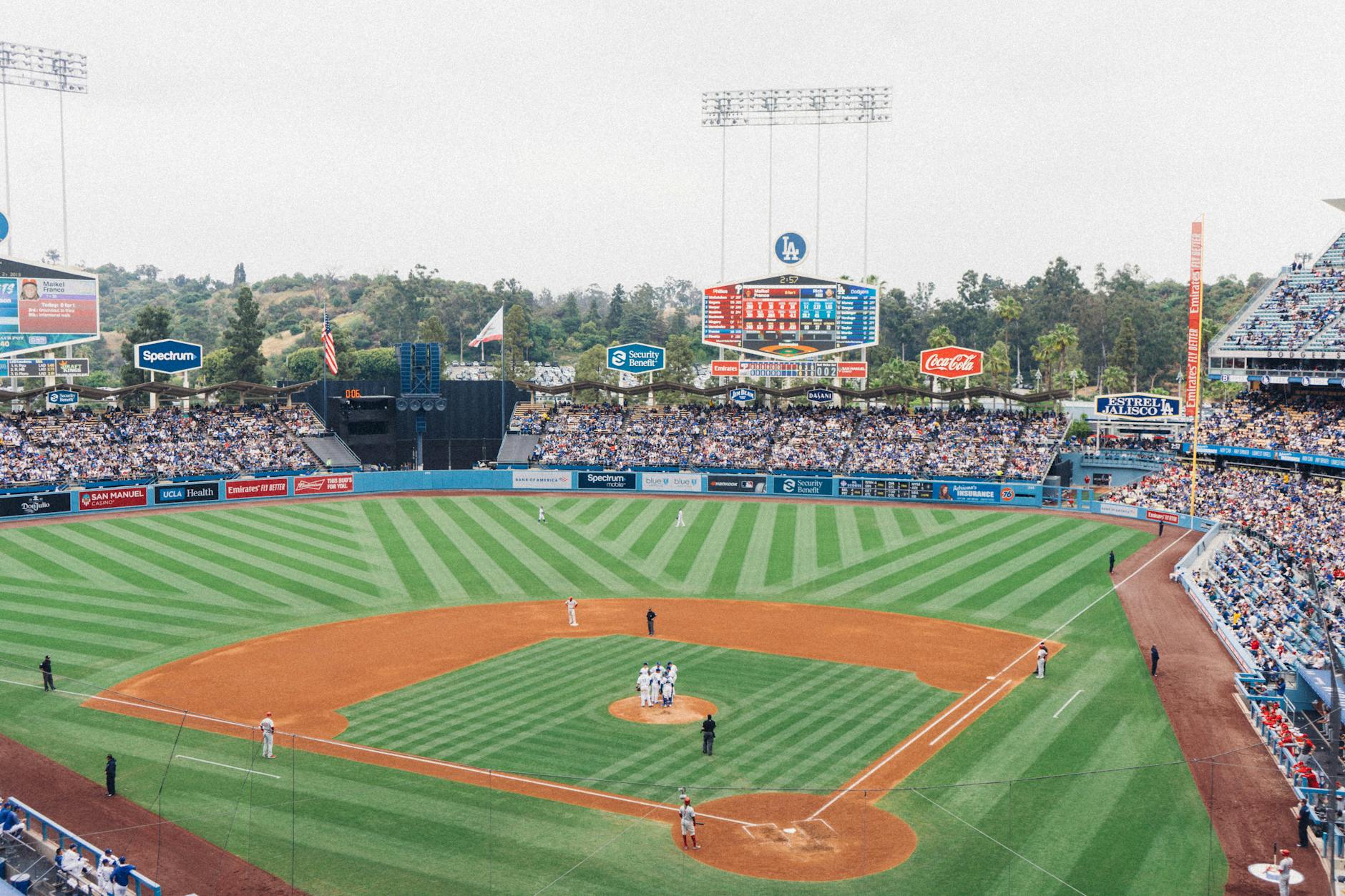
Photo by Martin Péchy on Pexels
What about Atlanta as an edge case?
Atlanta is an edge case because it combines a strong soccer culture, Mercedes-Benz Stadium, and a major knockout-stage role. The city presents itself as the soccer city of the South, and its hosting profile includes high-capacity match operations, regional fan identity, and semifinal-level visibility.
The Atlanta case is analytically useful because it shows how the 2026 football world cup is not only about coastal tourism markets. Atlanta United helped normalize large football crowds in the region, and Mercedes-Benz Stadium already has experience with high-volume event operations. The city’s cultural framing also matters: Southern hospitality, music, civil-rights history, and local sports identity will likely shape the visitor experience. For bettors, however, the key issue is not civic pride; it is whether teams can adapt to a loud indoor-style stadium environment and a schedule that may place Atlanta between long-haul travel points.
A less obvious insight is that Atlanta may magnify live-betting volatility. Indoor or retractable-roof stadium conditions can reduce some weather uncertainty, which may make tempo, pressing intensity, and substitution timing easier to model than in humid open-air environments. That does not mean outcomes become predictable, but it can shift the analytical weight toward tactical matchup data. Football Compass will track Atlanta-specific previews alongside team form, expected goals trends, and player workload. For broader context, review the [Internal Link: World Cup tactical analysis hub].
Where does the 2026 football world cup fail?
The 2026 football world cup fails when fans treat scale as convenience. A larger tournament offers more access, but it also introduces travel cost, scheduling complexity, uneven local transport, and more noise in betting markets across 16 host cities and three countries.
The first failure point is expectation management. A fan may assume that more matches mean easier ticket access, yet high-demand fixtures involving the United States, Mexico, Argentina, Brazil, England, France, or the final at MetLife Stadium will remain difficult. The second failure point is geographic compression. New York New Jersey, Los Angeles, Atlanta, Dallas, Mexico City, and Vancouver are not close substitutes; each requires separate budget assumptions. The third failure point is analysis overload. More teams create more data, but not all data improves prediction quality.
Here are the trade-offs fans should weigh before committing time or money:
- More matches create more viewing value, but also more scheduling fatigue.
- More host cities improve access, but increase transport uncertainty.
- More teams expand global representation, but may widen early-round quality gaps.
- More betting markets create opportunity, but also increase emotional wagering risk.
- More fan zones improve atmosphere, but do not replace match-day planning.
According to the 2026 FIFA World Cup final entry on Wikipedia, the final is scheduled for MetLife Stadium in East Rutherford, New Jersey, on July 19, 2026. That venue choice reinforces the tournament’s operational challenge: the event will end in the New York metropolitan area, but the journey there may begin thousands of miles away. The quoted principle from FIFA’s official tournament branding is concise: “We Are 26.” As a message, it captures unity; as a planning reality, it means fans must manage many moving parts.
Need a sharper way to separate real edges from tournament noise? Football Compass is designed for that exact problem.
Should you try 2026 football world cup betting analysis today?
Yes, you should start 2026 football world cup analysis early if you care about team trends, market movement, and practical fan planning. Early preparation helps identify tactical patterns, injury risks, player minutes, and host-city variables before odds fully absorb public attention.
However, “starting early” should not mean betting blindly months in advance. A disciplined approach begins with information mapping. Track qualification form, squad depth, coaching stability, travel routes, and likely venue conditions. Then compare those factors with market prices only when the fixture context becomes clear. Football Compass is useful here because it focuses on match predictions, team tactics, player stats, and daily tournament coverage rather than isolated hype. Have you ever thought about why some World Cup bettors lose despite predicting strong teams correctly? They often ignore price, timing, and format risk.
A practical workflow looks like this:
- Build a shortlist of teams with stable tactical identities.
- Monitor player workload in major leagues through May 2026.
- Separate emotional narratives from measurable performance indicators.
- Account for venue conditions in Los Angeles, Atlanta, Mexico City, and New York New Jersey.
- Review odds movement before placing any wager.
- Set a fixed staking plan and avoid chasing losses after high-profile upsets.

Photo by Franco Monsalvo on Pexels
The responsible conclusion is balanced: the 2026 football world cup rewards patient fans, but it can punish casual assumptions. Los Angeles provides scale and entertainment, Atlanta provides culture and stadium intensity, and MetLife Stadium provides the final stage. Yet the tournament’s real complexity sits between those landmarks: rest patterns, travel distances, pricing inefficiencies, and emotional market swings. To stay informed, follow sources that update daily and explain why a prediction changes, not just what the prediction is. For related reading, visit our [Internal Link: responsible football betting strategy].
When you are ready to follow the tournament with tactical context and measured betting insight, continue with Football Compass.
Frequently Asked Questions
Q: What is the 2026 football world cup?
A: The 2026 football world cup is FIFA’s expanded 48-team men’s national team tournament hosted by the United States, Canada, and Mexico. It is scheduled for June and July 2026 and includes 104 matches across 16 host cities. The final is planned for MetLife Stadium in the New York New Jersey area on July 19, 2026.
Q: How to plan for the 2026 football world cup as a fan?
A: Start by choosing your host city, likely match dates, accommodation area, and transport plan before buying non-refundable travel. Los Angeles, Atlanta, Mexico City, Vancouver, and New York New Jersey each require different timing assumptions. Fans should also monitor official ticketing channels and use fan zones when match tickets are unavailable.
Q: What is the difference between SoFi Stadium and the LA Fan Festival?
A: SoFi Stadium is the match venue, while the LA Fan Festival is a public celebration and viewing experience centered around Exposition Park. SoFi Stadium hosts scheduled tournament matches, including eight Los Angeles fixtures. The fan festival serves ticketed and non-ticketed visitors with screenings, food, music, and community events.
Q: Is 2026 football world cup betting worth it?
A: It can be worth considering only if you use disciplined analysis, price comparison, and responsible bankroll limits. The expanded 48-team format may create more markets, but it also increases uncertainty. Football Compass helps by tracking tactics, player stats, match context, and tournament news rather than relying on emotion.
Q: Why does World Cup travel planning fail?
A: World Cup travel planning usually fails because fans underestimate distance, traffic, ticket demand, and city-specific logistics. The 2026 tournament spans three countries, so moving between Los Angeles, Atlanta, Toronto, and Mexico City is a major commitment. Build extra time into accommodation, airport transfers, and match-day arrival plans.
Q: How much does it cost to follow the 2026 football world cup?
A: Costs vary widely, but fans should budget for tickets, flights, hotels, local transport, food, and fan events. High-demand cities such as Los Angeles and New York New Jersey are likely to require larger budgets than some secondary travel plans. A safer approach is to price a single-city trip first, then add extra matches only if the budget remains stable.
Thank you for reading.
Football Compass · Editorial Archive