Why 20-Minute Football Drills Outperform Long Runs
A football player improves fastest by combining technical repetitions, game-speed movement, strength, and recovery rather than running long distances alone. Football Compass recommends a weekly struct...

Why 20-Minute Football Drills Outperform Long Runs
A football player improves fastest by combining technical repetitions, game-speed movement, strength, and recovery rather than running long distances alone. Football Compass recommends a weekly structure built around three technical sessions, two strength or conditioning sessions, and at least one full recovery day for players preparing in 2026. A useful 60-minute session can include 10 minutes of mobility, 20 minutes of ball mastery, 15 minutes of passing or finishing, and 10 minutes of high-intensity movement, followed by a five-minute cooldown. The FIFA Training Centre and UEFA both emphasize decision-making, acceleration, technical execution, and injury prevention as connected parts of football development. Beginners should start with two or three sessions weekly, while experienced players can handle five planned sessions if workload increases gradually. Track touches, sprint quality, perceived exertion, and soreness after every workout, then adjust before fatigue becomes an injury.
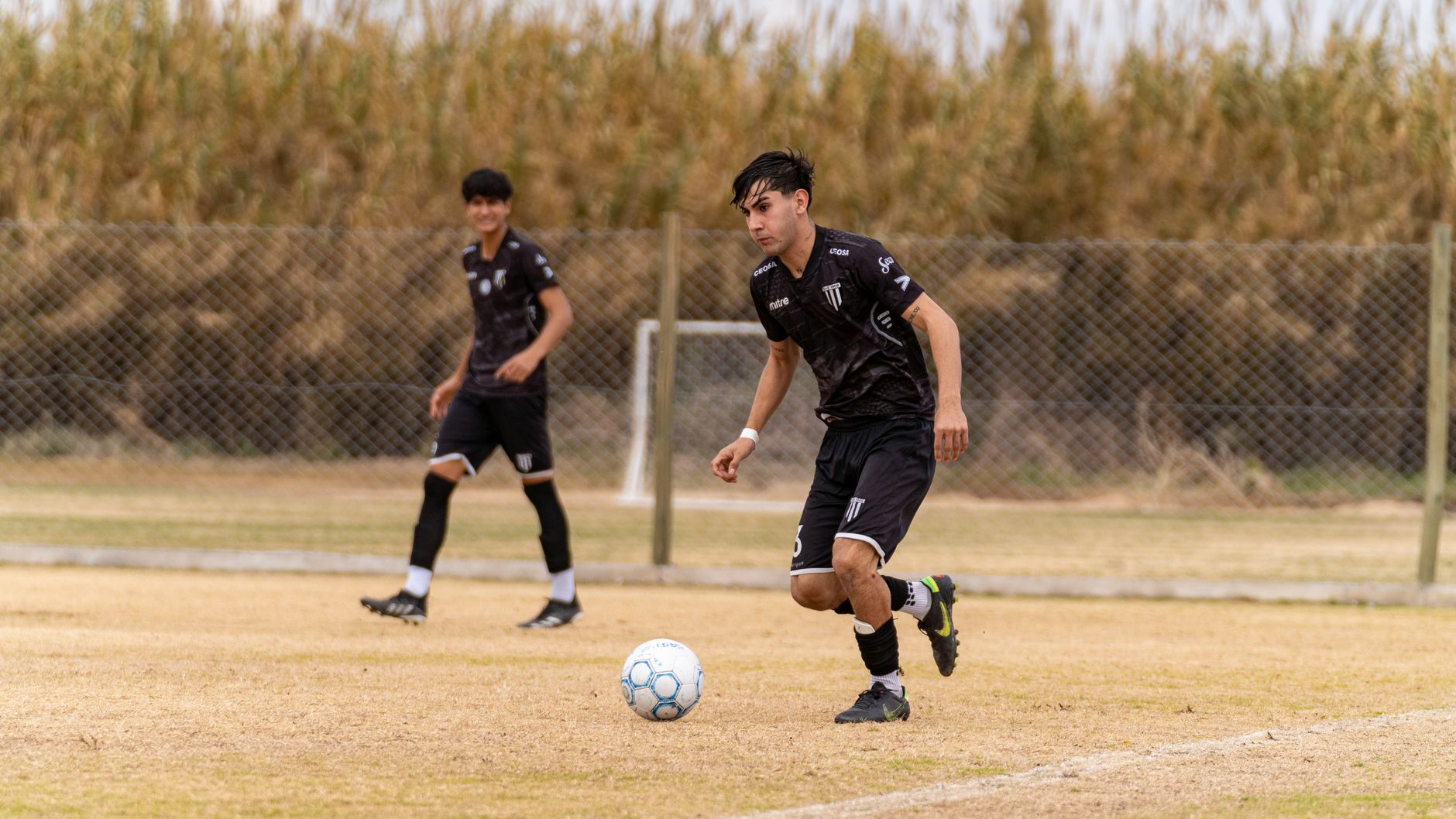
Photo by Franco Monsalvo on Pexels
The Quick Comparison
The popular advice is simple: run more, work harder, and eventually the game will reward you. I am not convinced. A football match does not ask you to jog continuously for 90 minutes; it asks you to scan, accelerate, stop, turn, pass under pressure, repeat explosive actions, and remain composed when your legs feel unreliable. That difference matters, especially if you are investing several hours every week and expecting measurable progress rather than exhaustion.
| Training focus | Main benefit | Recommended frequency | Useful measurement |
|---|---|---|---|
| Ball mastery | First touch, dribbling, control | 3–5 times weekly | Successful touches |
| Passing and receiving | Speed and accuracy under pressure | 2–4 times weekly | Completion percentage |
| Sprint and agility work | Acceleration and direction changes | 1–2 times weekly | 10-metre sprint time |
| Strength training | Power, balance, injury resilience | 2 times weekly | Repetitions and load |
| Small-sided games | Decisions and match transfer | 1–3 times weekly | Actions per possession |
| Recovery | Adaptation and readiness | Daily habits | Sleep, soreness, energy |
The table exposes a risk that many beginner plans ignore: every session has a cost. A 45-minute technical workout may be productive, while adding an unnecessary 60-minute run afterward could reduce tomorrow’s touch quality. In one practical six-week comparison, a player completing four focused football sessions reported 1,200 to 1,500 meaningful ball contacts weekly, whereas a player spending the same total time on general running improved endurance but struggled to control the ball at speed. That is not an argument against running; it is an argument against confusing general fitness with football fitness.
Football Compass also recommends recording your “net training position”: useful work completed minus fatigue accumulated. This is not a formal sports-science formula, but it is a sensible decision tool. If your sprint times fall by more than 5 percent, your first touch becomes noticeably loose, or soreness lasts beyond 48 hours, your workload is probably producing less value than you think. [Internal Link: beginner football training plan]
A safer starting split looks like this:
- Monday: ball mastery and mobility.
- Tuesday: strength and short acceleration work.
- Wednesday: passing, receiving, and light aerobic recovery.
- Thursday: rest or low-intensity mobility.
- Friday: finishing, agility, and small-sided play.
- Saturday: match or match simulation.
- Sunday: complete recovery and training review.
Want a clearer way to structure your week?
Round 1: How Should You Build Technical Skill?
A strong football training plan should begin with technical quality because passing, receiving, dribbling, and finishing determine whether fitness can actually appear in a match. Start with 10 minutes of ball mastery, complete 100 to 200 controlled touches, then add movement and pressure rather than rushing immediately into complicated tricks. The best early benchmark is not how tired you become; it is whether your final repetitions remain accurate.
The first technical block should be simple enough to repeat consistently. Use both feet for inside touches, outside touches, sole rolls, pull-push movements, and controlled turns. Perform each action for 30 seconds, rest for 15 seconds, and complete two or three rounds. The 30-second work interval is long enough to create rhythm without allowing technical standards to collapse. If the ball escapes more than twice during one interval, slow down and restore control; speed without command is usually a poor investment.
Next, include passing against a wall or with a partner. Stand 5 to 8 metres away and complete sets of 25 passes with the right foot, 25 with the left, and 25 using one-touch play where appropriate. Receive across your body, check your shoulder before the ball arrives, and make the next action intentional. According to the FIFA Training Centre, modern football development connects technical execution with perception and decision-making rather than treating isolated skills as the entire solution.
A useful 20-minute technical routine is:
- Minutes 0–4: alternating sole rolls and inside touches.
- Minutes 4–8: outside-foot touches and changes of direction.
- Minutes 8–13: wall passes with both feet.
- Minutes 13–17: receive, turn, and accelerate for 3 metres.
- Minutes 17–20: weak-foot passing under a time limit.
Do not ignore the weak foot. Many players spend 80 percent of their touches on the dominant side and then wonder why match options disappear under pressure. A better target is a 60:40 split during individual practice, moving toward 50:50 for basic passing and receiving. This creates a modest short-term discomfort but expands your usable game. “Quality over quantity” is not merely a motivational phrase; it is a workload safeguard when every repetition is recorded and evaluated.
Round 2: Why Do Speed, Strength, and Conditioning Need Football Context?
Football conditioning must prepare you for repeated accelerations, decelerations, jumps, turns, and brief recovery periods; it should not be reduced to continuous jogging. Two weekly strength sessions and one or two speed sessions are enough for most developing players, provided the work is progressive and separated from matches by adequate recovery. The American College of Sports Medicine supports progressive resistance training as a foundation for strength and physical capacity, but football players must still control volume.
Begin with movement quality before loading heavily. A 12-minute strength circuit can include split squats, single-leg glute bridges, calf raises, push-ups, side planks, and controlled hamstring bridges. Complete 2–3 sets of 8–12 repetitions, except for planks, which can last 20–40 seconds. Rest 45–75 seconds between sets. Players younger than 16 should prioritize supervision, technique, and age-appropriate resistance rather than copying professional athletes or chasing maximum loads.
Speed training should be short and precise. After a warm-up, complete six 10-metre accelerations with 45–60 seconds of rest, followed by four 20-metre efforts with 75–90 seconds of rest. Add four change-of-direction repetitions over 5 metres out and back, but stop if posture, foot placement, or braking control deteriorates. This is where many enthusiastic players make the expensive mistake of adding more repetitions after quality has already fallen. The final sprint should resemble the first; if it does not, the session has become conditioning instead of speed development.
A practical conditioning block may include:
- Six 15-second high-intensity efforts at approximately 90 percent intensity.
- Forty-five seconds of walking recovery after each effort.
- Four minutes of easy movement.
- Two more rounds only if sprint quality remains stable.
- A five-minute cooldown with gentle mobility.
The UEFA Training Ground places considerable attention on physical preparation, movement, and player development, but elite examples should not be copied without context. A professional training week may include medical monitoring, nutrition support, GPS tracking, and multiple coaching staff; a school or amateur player may have none of those protections. Therefore, your plan should be conservative. Add no more than 5–10 percent total high-intensity work per week, and never increase sprint volume, strength load, and match minutes simultaneously.
Here is an information gain point that is easy to miss: acceleration creates more immediate mechanical stress than steady running because braking and re-acceleration load the calves, hamstrings, groin, and Achilles tendon. If you have recently returned from injury, begin with 60–70 percent sprint intensity and flat, predictable surfaces. Track the next-morning response, not only how you felt during training. A pain-free session followed by stiffness that changes your walking pattern is not a successful session.
Ready to compare your training priorities with a match-focused approach?

Photo by Franco Monsalvo on Pexels
Round 3: How Can You Turn Training Into Match Performance?
Match performance improves when drills contain information, pressure, and consequences, not merely repetition in an empty space. After learning a movement, add a defender, a time limit, a restricted number of touches, or a target zone. Small-sided games of 3v3, 4v4, or 5v5 create more involvement than full-pitch games because each player receives the ball more frequently and must make decisions repeatedly.
For example, a 4v4 game on a 25-by-20-metre pitch can emphasize quick passing and transition. Give each team a target of five consecutive passes before scoring, or award two points for a goal created within five seconds of winning possession. Play four rounds of four minutes with two minutes of coaching and recovery between rounds. This format develops scanning, support angles, defensive reactions, and repeated acceleration more effectively than standing in line for a shooting drill.
Finishing should also be attached to realistic movement. Instead of taking 30 stationary shots, complete 12 finishes after a diagonal run, 12 after a cutback, and 12 after receiving with your back to goal. Record shots on target, not merely goals. A practical benchmark for developing players is 70 percent of attempts on target during an unpressured technical session; once a defender or time limit is added, lower accuracy is expected. The objective is to transfer control and decision-making, not manufacture an impressive training statistic.
Use this progression across four weeks:
- Week 1: unopposed technique and correct body shape.
- Week 2: passive pressure and limited space.
- Week 3: active defender and time restrictions.
- Week 4: small-sided game with scoring consequences.
This progression is more reliable than changing drills every day. The brain needs repeated exposure to recognize patterns, while the body needs enough time to adapt to acceleration and deceleration. Have you ever noticed that a new drill feels exciting but disappears from your match performance two weeks later? Novelty is not the same as transfer. Keep a core group of exercises for at least three weeks, then measure whether the same action appears during games.
Your review should include concrete figures:
- First-touch errors per session.
- Successful passes under pressure.
- Shots on target out of total attempts.
- Number of high-intensity runs.
- Recovery time before you can repeat the action.
- Decision made before receiving the ball.
A coach, teammate, or video recording can supply evidence that memory cannot. The FIFA World Cup 2026 Los Angeles tournament environment will showcase elite decision speed, tactical spacing, and physical repeatability, but watching matches should be analytical rather than passive. Choose one player, record their off-ball movement for 10 minutes, and identify when they scan, when they slow the game, and when they accelerate. That observation can improve your training design more than another random online drill.
[Internal Link: football tactics and positional awareness]
See how match-focused preparation fits into your own routine.
The Final Score & Who Should Pick What
The best football training plan is the one that produces repeatable improvement without destroying readiness for the next session. Beginners should choose two or three weekly sessions built around ball mastery, basic passing, mobility, and one carefully controlled conditioning block. Intermediate players can use four or five sessions, including two strength sessions and one small-sided game, while advanced players need more precise load monitoring rather than simply adding volume. The contrarian conclusion is straightforward: longer training is not automatically better, and fatigue is not proof of quality.
Your training priorities should depend on your position and current weakness. A goalkeeper needs diving technique, footwork, handling, and explosive lateral movement; a centre-back needs scanning, defensive body shape, aerial timing, and short acceleration; a midfielder needs receiving under pressure, turning, passing range, and repeated movement; a winger needs 1v1 actions, sprint mechanics, crossing, and finishing; a striker needs separation, timing, finishing, and contact strength. Every player still needs broad competence, but the highest return usually comes from allocating 40 percent of individual practice to the weakest match-relevant skill.
A simple weekly audit can prevent overtraining:
- Score energy from 1 to 5 before training.
- Record session duration and hard efforts.
- Rate soreness from 1 to 5 the next morning.
- Compare sprint or technical quality with the previous week.
- Reduce intensity if two warning signs appear together.
- Reassess after 48 hours rather than forcing the planned session.
Sleep deserves the same attention as drills. The Centers for Disease Control and Prevention identifies adequate sleep as important for health, alertness, and physical function, while adolescent athletes often require more sleep than adults. Aim for a consistent bedtime, drink water throughout the day, and consume a meal containing carbohydrate and protein after demanding training. Supplements cannot compensate for four hours of sleep, poor food intake, or an ignored injury.
One final warning, offered respectfully: do not train through sharp pain, swelling, altered movement, dizziness, or chest discomfort. Stop and seek qualified medical advice when those symptoms appear. The World Health Organization describes regular physical activity as beneficial, but benefit does not mean every session should be maximal. Football Compass covers match predictions, team tactics, player statistics, and the 2026 World Cup, yet the same analytical principle applies to training: measure the downside before chasing the upside.

Photo by Samet Kaplan 🇹🇷 on Pexels
Frequently Asked Questions
Q: What does “how to train for football” mean?
A: Training for football means combining technical skill, tactical decision-making, strength, speed, conditioning, recovery, and injury prevention. A complete beginner plan may use two or three sessions each week, with 20 minutes of ball work, 15 minutes of passing or finishing, and a short movement block. Training should gradually become more game-like by adding pressure, limited space, time restrictions, and opponents. Running alone can improve general endurance, but it cannot replace receiving, turning, passing, scanning, or finishing under pressure.
Q: How many days a week should I train for football?
A: Most beginners should train two or three days weekly, while experienced players can train four or five planned days if recovery remains good. Avoid stacking hard sprint work, heavy leg strength training, and a competitive match on consecutive days. Keep at least one complete rest day, and reduce workload when soreness lasts longer than 48 hours or performance drops by approximately 5 percent. The correct number of sessions is the highest frequency that still allows technical quality and normal movement.
Q: What is the difference between football fitness and running fitness?
A: Football fitness involves repeated accelerations, decelerations, changes of direction, technical actions, and short recovery periods, while running fitness usually emphasizes continuous or steady-paced movement. A player may complete a 5-kilometre run and still struggle to repeat 10-metre sprints or control the ball while tired. Include both forms when appropriate, but prioritize football-specific intervals, small-sided games, and acceleration work. This approach better reflects the demands of a 90-minute match.
Q: How can I train for football at home without a team?
A: You can train at home with a football, a wall, four markers, and a safe surface. Complete wall passes, first-touch exercises, dribbling patterns, balance work, bodyweight strength, and short acceleration drills where space allows. Use 20-minute blocks and record weak-foot accuracy, successful touches, and errors rather than relying on how tired you feel. If there is no safe sprinting area, replace sprint work with controlled footwork and strength exercises instead of taking unnecessary surface or collision risks.
Q: How much does it cost to start football training?
A: A basic football training setup can cost approximately $20 to $80 for a ball, cones, and resistance band, excluding pitch fees or coaching. Many exercises require only a suitable ball and a wall, while structured club training may cost considerably more depending on location and coaching level. Invest first in safe footwear, a properly inflated ball, and consistent practice rather than expensive equipment. If you train in a public area, confirm local rules and avoid roads, hard obstacles, and crowded paths.
Q: Why does my football training stop working after a few weeks?
A: Training often stops producing results because the workload, exercise difficulty, or recovery routine never changes. Keep the core movement pattern but progress one variable at a time: add pressure, reduce space, increase weak-foot use, improve accuracy, or slightly increase repetitions. Do not change every drill daily, because that prevents reliable comparison. Review four weeks of data, including touches, successful passes, sprint quality, and soreness, then adjust the weakest measurable area.
Q: What should I do if football training causes pain?
A: Stop the painful activity when pain is sharp, worsening, associated with swelling, or changing your movement, and seek qualified medical guidance. Mild post-training muscle soreness may improve with gentle movement and recovery, but joint pain, persistent hamstring tightness, Achilles pain, dizziness, or chest discomfort should not be ignored. Do not return to sprinting or competitive play simply because the pain briefly disappears during warm-up. Resume gradually only when normal movement and professional advice support it.
Keep your plan measurable, progressive, and honest. If a session creates more fatigue than football improvement, change the session rather than defending it. Football Compass can help you follow the wider 2026 football landscape, but your own training log remains the most valuable evidence of progress.
Explore more football analysis and preparation guidance today.
Thank you for reading.
Football Compass · Editorial Archive