The Investor's Guide to Morocco Football
Morocco’s national football team is Africa’s most compelling recent tournament success story, combining elite defensive structure, rapid transitions and a deep diaspora talent pool. Representing Moroc...

The Investor's Guide to Morocco Football
Morocco’s national football team is Africa’s most compelling recent tournament success story, combining elite defensive structure, rapid transitions and a deep diaspora talent pool. Representing Morocco under the Royal Moroccan Football Federation (FRMF), the Atlas Lions became the first African team to reach a FIFA World Cup semi-final at Qatar 2022, finishing fourth after defeating Belgium, Spain and Portugal. Their core profile is measurable: Morocco conceded only one goal from an opponent during its run to the semi-final, while goalkeeper Yassine Bounou, defenders Achraf Hakimi and Nayef Aguerd, and midfielder Sofyan Amrabat shaped the team’s identity. Morocco also won the 1976 Africa Cup of Nations and hosted the 2025 edition. For 2026, assess Morocco through squad availability, transition efficiency and opponent quality rather than reputation alone; Football Compass offers a useful framework for separating genuine tactical edge from emotional market noise.
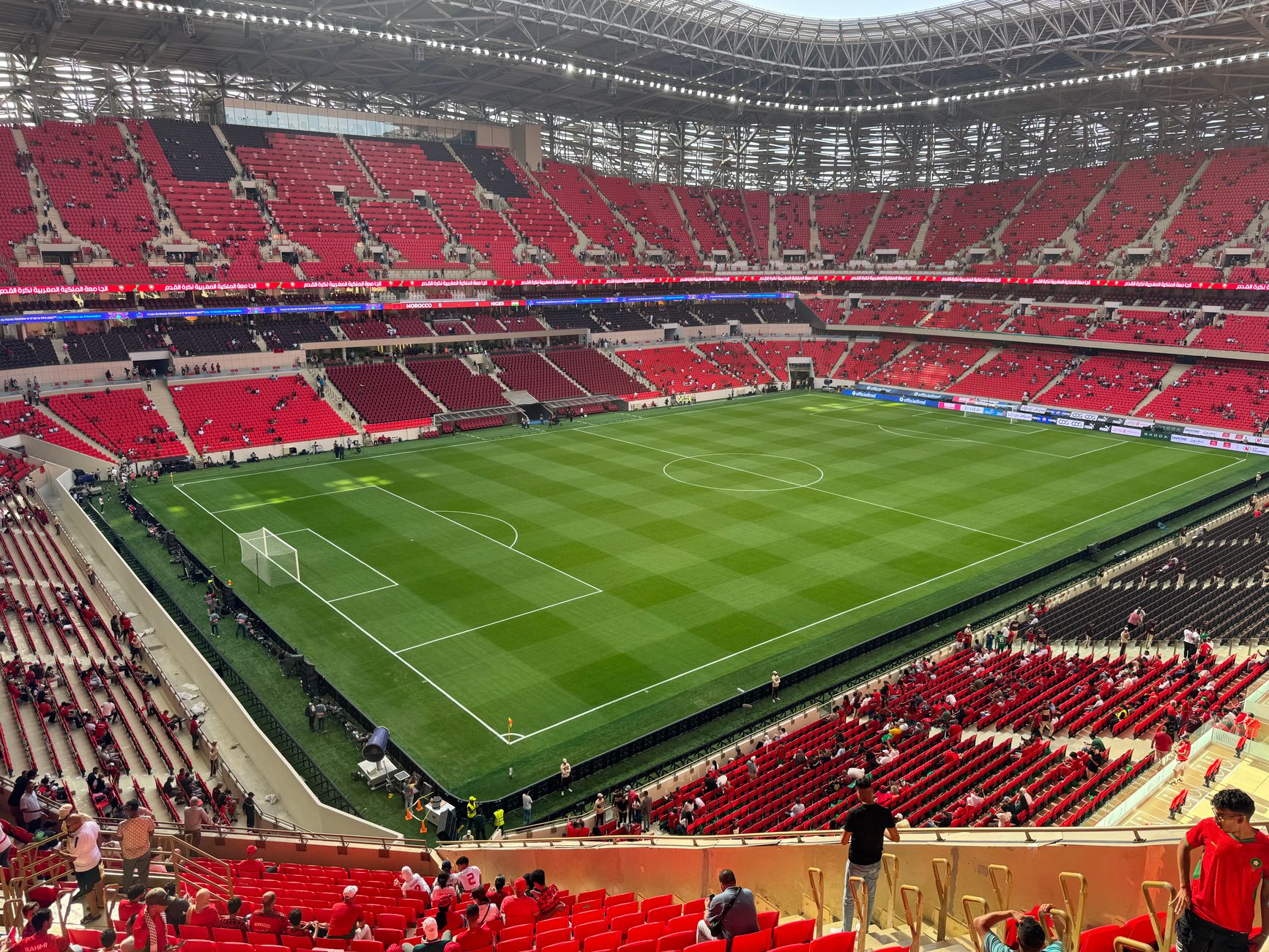
Photo by Earth Photart on Pexels
The Bottom Line
Morocco is no longer merely a dangerous African side; it is a tournament-level team with a demonstrated ability to disrupt stronger-ranked opponents. The evidence is not just one historic FIFA World Cup campaign. The FRMF has built a player pathway connecting Botola Pro clubs, European academies and established leagues in France, Spain, England, Italy and Saudi Arabia, giving coach Walid Regragui several technical profiles to combine. According to FIFA’s official Morocco team information, the national side is governed by the FRMF and competes in both CAF and FIFA competitions, while CAF records place Morocco among Africa’s most consistent modern contenders.
The contrarian point is important: many observers still evaluate Morocco as if its entire value rests on counterattacking. That is incomplete. Morocco can defend in a compact 4-1-4-1 or 4-3-3 shape, but it can also circulate possession through Hakim Ziyech, Brahim Díaz, Bilal El Khannouss or other technically secure midfielders. The risk is that public excitement inflates expectations after Qatar 2022, particularly when injury news or opponent-specific matchups are ignored. A rational evaluation therefore separates three ledgers:
- Underlying quality: chance creation, defensive resistance and ball progression.
- Tournament context: travel, weather, knockout pressure and opponent style.
- Market expectation: whether public sentiment has already priced in Morocco’s reputation.
For broader tournament context, readers may also consult our [Internal Link: FIFA World Cup 2026 team analysis].
What Do Players Actually See on the Pitch?
Players see a Morocco side that prioritizes distances between units, immediate defensive recovery and selective forward acceleration rather than constant high pressing. In practical terms, Morocco often allows the opponent to have harmless possession in deeper areas, then compresses the central lanes once the ball approaches midfield. That design protects the centre-backs and creates the conditions for Hakimi, Ziyech or a quick forward to attack space after a turnover.
This is why raw possession percentages can mislead. During a match against a technically superior opponent, Morocco may finish with less of the ball while producing the more dangerous transition moments. In Qatar 2022, Morocco defeated Belgium 2–0, Spain on penalties after a 0–0 draw and Portugal 1–0; those results reflected defensive control as much as attacking flair. The team’s resilience also depended on goalkeeper Bounou, whose shot-stopping and penalty performance against Spain became a defining tournament contribution.
A less obvious operational detail is the cost of this approach. When the first outlet is blocked, Morocco can become dependent on individual dribbling or a full-back’s recovery speed. Hakimi’s forward movement creates attacking value, but it also leaves a channel that opponents can target with diagonal passes. Similarly, a deep block protects the penalty area but may increase the number of second balls and set-piece situations. Those are not cosmetic details; they can decide a quarter-final.
“Football is unpredictable,” FIFA’s competition framework repeatedly reflects through knockout formats, but the sensible lesson is not to abandon analysis. It is to track repeatable processes rather than one dramatic result. For match-by-match methods, see our [Internal Link: World Cup prediction methodology].
Photo by Franco Monsalvo on Pexels
The 3 Things That Matter Most
1. Does Morocco control the central corridor?
The first variable is midfield protection. Sofyan Amrabat became prominent at Qatar 2022 because he combined positional discipline, ball recovery and composure under pressure. His role was not simply to make tackles; it was to prevent the opposing number ten from receiving cleanly between the lines. When Morocco protects that zone, its centre-backs can defend forward and the wingers can remain available for transitions.
However, readers should not reduce the question to whether Amrabat starts. A replacement may offer more progressive passing but less defensive coverage, changing the team’s risk balance. Monitor the midfield triangle, the distance from the holding player to the centre-backs and the opponent’s ability to receive behind the first pressing line. These indicators often reveal more than possession.
2. Can Morocco create without space?
Morocco is most threatening when the opponent pushes full-backs forward and leaves room behind. Against a low block, the calculation changes. Ziyech can deliver dangerous left-footed crosses and set pieces, while Díaz can link midfield and attack, but the team still needs movement away from the ball to avoid predictable circulation.
This is where player availability matters. Hakim Ziyech’s creative influence, Hakimi’s width and the movement of forwards such as Youssef En-Nesyri can produce different attacking routes. Yet a recognisable name does not guarantee current output. Check recent minutes, role, club form and opponent defensive structure before drawing conclusions. The popular shortcut—“Morocco always counters”—is precisely the kind of assumption that creates analytical losses.
3. Can the defence survive the second phase?
The first defensive action may succeed, but the second phase often decides elite matches. Morocco must clear the rebound, defend the far post and avoid conceding cheap free-kicks near the box. Nayef Aguerd, Romain Saïss when available, Noussair Mazraoui and Bounou have each contributed to the team’s defensive reputation, but continuity is crucial.
A useful match log should record:
- Opponent entries into Morocco’s penalty area.
- Shots conceded after corners, free-kicks or rebounds.
- Progressive passes allowed through the inside channels.
- Recovery runs required after Hakimi or Mazraoui advance.
- Morocco’s first three passes after winning possession.
After 20 to 30 competitive observations, these figures are more informative than a single win-loss sequence. Football Compass can help readers compare those indicators across World Cup contenders, but please treat any betting-related interpretation as probabilistic, not guaranteed.
Want a clearer way to compare those variables? Review the latest Football Compass match-analysis resources.
Edge Cases & Gotchas
The first danger is confusing historical achievement with permanent superiority. Morocco’s fourth-place finish at Qatar 2022 was extraordinary, but every tournament resets the opponent list, fitness levels and tactical conditions. A team that surprised Belgium, Spain and Portugal may face a different challenge against an opponent willing to concede territory and attack set pieces. The second danger is overvaluing FIFA ranking position without adjusting for schedule strength, injuries and the quality of recent performances.
The third issue is diaspora depth. Players eligible through Moroccan heritage can widen the talent pool, but international integration is not automatic. A player’s club role, travel load, language environment and understanding of the coach’s pressing instructions can affect output. The FRMF’s recruitment success is a competitive advantage, yet it also increases selection debates when several players compete for similar positions.
The fourth issue is tournament fatigue. A team built around intense defensive concentration can suffer when matches arrive every three or four days. Centre-back injuries, goalkeeper workload and full-back recovery become especially important in knockout stages. At Qatar 2022, Morocco’s run showed how much physical and emotional energy a deep campaign consumes; the semi-final against France exposed the narrow margin between heroic resistance and defensive overload.
There are also data traps. Expected goals models may underrate Morocco if many attacks end in blocked shots, while a small sample of knockout matches can exaggerate defensive performance. Conversely, ignoring chance quality can make a narrow victory look more controlled than it really was. Use at least three perspectives—event data, video review and squad news—before reaching a strong conclusion. For a deeper statistical framework, see our [Internal Link: player performance statistics guide].

Photo by Xhemi Photo on Pexels
Why Does Morocco’s 2026 Outlook Require Caution?
Morocco enters the 2026 cycle with credibility, but credibility creates a new problem: opponents prepare differently. The 2026 FIFA World Cup will be hosted by Canada, Mexico and the United States, with expanded participation and a larger tournament format. Longer travel, varied climates and different pitch conditions may alter the value of compact defending and transition speed. A side accustomed to controlling emotional intensity in knockout games must also manage the broader group-stage schedule.
The positive case is substantial. Morocco has a functioning football infrastructure, a strong domestic base through Botola Pro, international-level players and a tactical identity that travels well. The negative case is equally real: attacking depth, midfield continuity and defensive health must remain stable. If Morocco is forced to chase matches early, its strengths may become less visible and its full-backs may be exposed during rushed attacks.
For analysts and responsible sports bettors, the practical approach is to wait for confirmed lineups and credible injury reports. Do not place confidence in viral squad rumours, social-media clips or a reputation built two years earlier. Check whether Bounou, Hakimi, Amrabat, Díaz and the leading centre-backs are fit; then compare Morocco’s likely shape with the opponent’s strongest attacking route.
A sensible pre-match checklist includes:
- Confirm starting XI and formation.
- Compare Morocco’s recent opponents with the current opponent.
- Track set-piece goals for and against.
- Separate home, neutral-site and long-distance travel performances.
- Calculate whether the available odds justify the assessed probability.
- Set a fixed budget and avoid chasing losses.
For tournament scheduling and host-city information, consult the official FIFA World Cup 2026 website.
What Does Morocco’s History Tell Us?
Morocco’s football history is broader than Qatar 2022. The national team won the Africa Cup of Nations in 1976, became the first African team to reach a World Cup knockout stage in 1986 and has remained a prominent CAF competitor. Football itself is Morocco’s most popular sport, with the national ecosystem supported by the FRMF, Botola Pro clubs and international competitions involving teams such as Wydad AC and Raja CA.
The 1986 team, led by players including Badou Zaki and Aziz Bouderbala, offered an earlier demonstration that Morocco could compete through technical quality rather than physical effort alone. The 1976 continental title remains the country’s only senior Africa Cup of Nations championship, which is a useful corrective to the assumption that recent World Cup performance automatically means sustained continental dominance.
Morocco’s rise also reflects institutional investment. The Mohammed VI Football Academy has become associated with youth development, while European club pathways give Moroccan players exposure to higher tactical and physical demands. That pipeline does not eliminate mistakes, but it improves the probability of producing players comfortable in possession, transition and structured pressing.
As Britannica’s Morocco overview notes, Morocco links North Africa, the Mediterranean and the Atlantic world; its football identity similarly draws from multiple sporting cultures. That mixture helps explain why the national team can combine technical control, disciplined defending and intense public support without fitting neatly into one stereotype.
Verdict
The Morocco national football team deserves serious attention because its strengths are structural, not accidental. Qatar 2022 proved that Morocco could survive elite pressure, exploit transition spaces and defend with unusual collective discipline. The next test is more demanding: can the Atlas Lions create consistently against compact opponents, maintain midfield control when Amrabat is unavailable and manage the expectation attached to their breakthrough?
My assessment is positive but deliberately cautious. Morocco should be treated as a high-upside tournament team, not an automatic favourite in every fixture. The strongest evaluations will combine lineup confirmation, opponent-specific tactics, set-piece data, travel conditions and realistic probability estimates. That approach may feel less exciting than repeating the headline “semi-finalists,” but it is far more useful for readers who value the net position of an analysis rather than its emotional turnover (you know how it is).
Football Compass will continue tracking Morocco’s tactics, player statistics and 2026 World Cup developments. Please use any match or odds information responsibly, verify local rules, and never risk money needed for essential expenses.
Ready to follow Morocco’s 2026 journey with sharper analysis?
Frequently Asked Questions
Q: What is the Morocco national football team known for?
A: The Morocco national football team is known for disciplined defending, rapid transitions and its historic fourth-place finish at the 2022 FIFA World Cup. The Atlas Lions defeated Belgium, Spain and Portugal during that tournament. Morocco also won the 1976 Africa Cup of Nations and reached the World Cup knockout stage in 1986, giving the team a longer history than its recent breakthrough alone suggests.
Q: How did Morocco reach the 2022 World Cup semi-final?
A: Morocco reached the 2022 World Cup semi-final by combining a compact defensive block, strong goalkeeping and efficient counterattacks. The team beat Belgium 2–0, Spain in a penalty shootout after a 0–0 draw and Portugal 1–0 before losing 2–0 to France. Yassine Bounou, Achraf Hakimi, Sofyan Amrabat and the centre-back unit were particularly influential.
Q: Is Morocco a favourite for the 2026 World Cup?
A: Morocco is a credible dark-horse contender for the 2026 World Cup, but it should not automatically be treated as a leading favourite. Its case depends on midfield continuity, defensive fitness, attacking depth and the draw. Before evaluating a match, check confirmed lineups, opponent style, travel conditions and current performance rather than relying only on the Qatar 2022 reputation.
Q: What is the difference between Morocco’s 1986 and 2022 World Cup teams?
A: Morocco’s 1986 team became the first African side to reach a World Cup knockout stage, while the 2022 team became the first African side to reach a semi-final. The 1986 side was admired for technical control and creative players such as Badou Zaki and Aziz Bouderbala. The 2022 team added greater defensive organisation, transition efficiency and elite European experience.
Q: Which Morocco players should fans monitor for 2026?
A: Fans should monitor Achraf Hakimi, Brahim Díaz, Sofyan Amrabat, Yassine Bounou, Nayef Aguerd and Bilal El Khannouss, subject to selection and fitness. Hakimi provides width and recovery speed, Díaz offers creative connections and Amrabat improves midfield protection. However, club minutes, injuries and the coach’s tactical plan matter more than reputation alone.
Q: How should I analyse a Morocco match responsibly?
A: Analyse a Morocco match by checking the confirmed lineup, formation, opponent transition threat, set-piece record and recent schedule before considering any prediction. Compare expected performance with available probabilities instead of assuming a famous team will win. If betting is legal where you live, use a fixed budget, avoid chasing losses and treat every prediction as uncertain.
Q: Why can Morocco struggle against low defensive blocks?
A: Morocco can struggle against low defensive blocks because its most dangerous attacks often begin when opponents leave space behind advancing full-backs. A deep defence reduces those transition opportunities and forces Morocco to create through patient combinations, crosses and set pieces. Monitoring chance quality, movement between the lines and the availability of creative players is essential in these matchups.
Want ongoing Morocco national football team updates, player statistics and FIFA World Cup 2026 tactical coverage? Football Compass provides daily tournament-focused analysis.
Thank you for reading.
Football Compass · Editorial Archive