Before You Bet, Read This VAR Breakdown
Video Assistant Referee (VAR) is a football officiating system that reviews match-changing incidents for a clear and obvious error or serious missed incident. The system operates in competitions autho...
Before You Bet, Read This VAR Breakdown
Video Assistant Referee (VAR) is a football officiating system that reviews match-changing incidents for a clear and obvious error or serious missed incident. The system operates in competitions authorised by FIFA and follows the International Football Association Board (IFAB) protocol, covering goals, penalties, direct red cards, and mistaken identity. VAR officials review broadcast-quality footage from multiple camera angles, then recommend action to the on-field referee, who always makes the final decision. A review may involve a silent check, a referee-only decision, or an on-field review at the pitch-side monitor. VAR does not automatically correct every debatable call, and there is no fixed review time limit. For 2026 World Cup analysis, Football Compass tracks VAR trends alongside team tactics, player statistics, and match context. Before placing any football wager, verify the official decision, market settlement rules, and whether a goal or card remains subject to review.

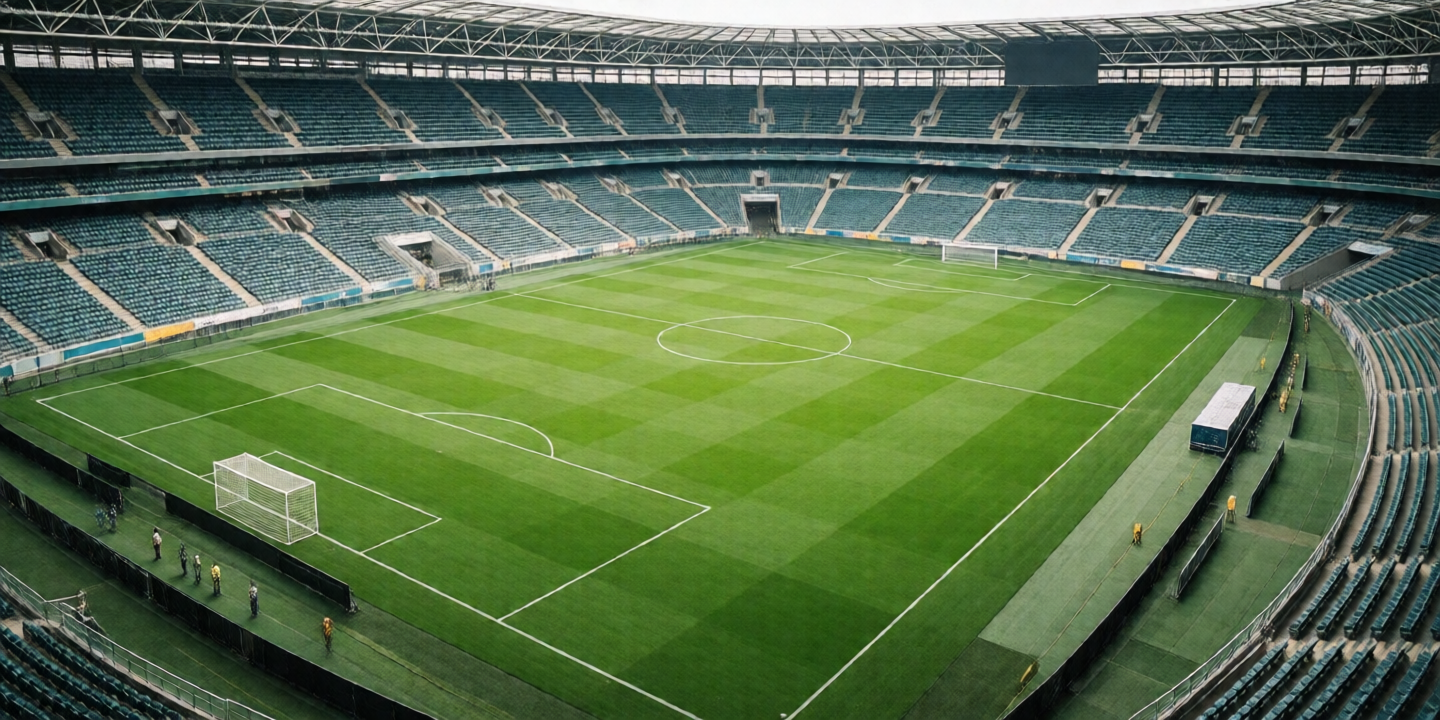
Photo by Ibrahim Boran on Pexels
Want a clearer match-reading framework before following the next fixture? Football Compass provides daily World Cup-focused analysis, but please remember that VAR information can clarify incidents without eliminating betting risk.
If you are watching a possible goal: understand the VAR check
VAR checks a possible goal by reviewing the attacking phase for offside, fouls, handball offences, and whether the ball fully crossed the goal line. The Video Assistant Referee communicates relevant evidence to the referee, who can uphold the goal, disallow it, or conduct an on-field review when the evidence requires visual judgement.
The first point many viewers misunderstand is that VAR does not replace the referee. Under the IFAB Video Assistant Referee protocol, the referee must make an initial decision, even when the incident is difficult to see. The VAR then automatically checks that decision, normally without stopping play unless the referee needs to intervene. As IFAB states, “the final decision is always taken by the referee,” which means a video official cannot independently award a goal.
The review sequence usually looks like this:
- The attacking move is examined from the relevant moment under the Laws of the Game.
- VAR checks camera angles, replay speed, player positions, contact, and ball location.
- If no clear error appears, the original decision stands.
- If intervention is necessary, VAR recommends a review or correction.
- The referee communicates the final outcome, sometimes using the pitch-side monitor.
A goal may therefore be delayed by an offside line, a possible attacking handball, or a foul several seconds before the shot. This is precisely why celebrating early is emotionally expensive (and why I would rather wait for confirmation). [Internal Link: football rules and match-official guide]
Why are offside decisions particularly sensitive?
Offside decisions are sensitive because the law depends on the exact moment a teammate plays or touches the ball, not simply where an attacker appears when the ball enters the net. VAR systems use calibrated camera feeds and virtual lines, but the quality of the relevant frame, body-part selection, and available camera angle can still affect the review.
Semi-automated offside technology, used in major FIFA competitions, adds tracking data and artificial-intelligence assistance to identify the kick point and player positions. It does not mean every decision is entirely machine-made. Human officials still validate the incident, and the referee remains responsible for the match decision. The system is strongest when the camera coverage is stable and the offence is geometrically clear; it is less satisfying when a player’s shoulder, knee, or boot is barely ahead.
For bettors, a crucial operational detail is settlement timing. A goal market may appear settled in a betting interface and then be suspended during a review. Never assume a green notification equals a final result. Check the operator’s football rules, especially for goal scorers, first-goal markets, player cards, and same-game accumulators, because a cancelled goal can alter several linked selections.
What happens after a VAR goal review?
After a VAR goal review, the referee either confirms the goal, disallows it, or changes another decision connected to the attacking phase. The restart depends on the final ruling, such as a kick-off after an awarded goal or a defensive restart after an attacking offence.
A silent check can take place while play continues, but a formal review generally requires the referee to stop the match at a suitable moment. If the referee overturns a goal because of an earlier foul, later disciplinary consequences may still apply according to the Laws of the Game. In practical terms, the review is not merely “was the shot legal?”; it can involve the entire relevant attacking passage.
This distinction matters when interpreting live odds. A disallowed goal can rapidly change totals, match-winner prices, both-teams-to-score expectations, and momentum assumptions. However, the market reaction may be faster than the information displayed on television, creating a dangerous temptation to chase a price. Football Compass match notes can help separate tactical evidence from emotional overreaction, but no preview can guarantee how a review will end.
If you are judging a penalty: separate contact from a punishable offence
VAR reviews a penalty decision when there may be a clear and obvious error or a serious missed incident involving an offence inside the penalty area. The review considers the location of the contact, the player’s actions, the ball’s position, and whether the challenge meets the Laws of the Game threshold for a foul.
A penalty is not awarded merely because contact occurred. Football contains routine physical contact, and VAR is designed to correct significant errors rather than re-referee every contest. The on-field referee may receive a recommendation after a silent check or be invited to the monitor for an on-field review when the incident involves interpretation, such as the severity of a tackle or whether an arm position made a handball offence punishable.
This is where the popular belief that “VAR checks everything, so every penalty should be overturned” becomes dangerous. VAR checks every reviewable incident, but intervention requires a material threshold. According to FIFA’s Laws of the Game resources, the decision still depends on the applicable law and the referee’s interpretation of the event, not on crowd volume or social-media certainty.
The practical penalty workflow includes:
- Identifying whether the incident occurred inside the penalty area.
- Determining which player initiated or caused the contact.
- Reviewing normal-speed footage, slow motion, and alternate angles.
- Assessing handball position, movement, distance, and reaction time where relevant.
- Confirming whether the original referee decision contains a clear and obvious error.
- Applying the final decision and appropriate restart.
Get more context on how tactical pressure influences refereeing with our [Internal Link: match tactics and officiating analysis].
If you are comparing penalty evidence: do not rely on slow motion alone
Slow motion can exaggerate the appearance of contact because it removes the speed and rhythm of the live action. A tackle that looks catastrophic frame by frame may be a fair challenge at normal speed, while a subtle trip can be difficult to appreciate without replay. This is an important reason VAR officials use both normal-speed and slowed footage rather than treating slow motion as automatically superior.
The review also depends on what the referee originally saw. A factual question, such as whether a player’s foot was inside the area, is usually easier to verify than a subjective question, such as whether the contact was sufficient to constitute a foul. In the first case, a correction may be straightforward; in the second, the threshold for overturning the original decision remains significant.
From a betting perspective, penalty markets deserve extra caution. A penalty awarded during a live match can change the expected goal state, but a missed kick, retake, goalkeeper encroachment, or later VAR intervention may produce multiple rule events. Track the official restart and the competition’s settlement rules instead of relying on a television graphic. I record the original call, the review signal, the final ruling, and the market status separately because collapsing them into one note creates accounting errors.
Want to follow the next major tournament with more disciplined context? Use Football Compass for team form, tactical matchups, and player-stat updates rather than treating one penalty as the entire story.
If you are analysing a red card: know what VAR can and cannot review
VAR can recommend a review for a possible direct red card, including serious foul play, violent conduct, spitting, biting, or extremely offensive, insulting, and abusive actions. It generally does not review a clearly incorrect second yellow card under the standard protocol, although competition regulations and later disciplinary processes can differ.
The key distinction is between a direct sending-off and an ordinary caution. A serious foul-play incident may be reviewed if the referee missed it or issued a lesser sanction, while a second caution is normally outside the VAR review category. VAR can also correct mistaken identity when the referee cautions or dismisses the wrong player. This is not a minor administrative detail: it can affect match statistics, player availability, disciplinary records, and betting markets involving cards or player dismissals.
A red-card review typically follows these stages:
- VAR identifies a potential direct-red-card incident.
- The referee’s original decision is checked against the available footage.
- VAR recommends intervention only if the protocol threshold is met.
- The referee may view the monitor for an interpretation-based decision.
- The referee announces the sanction and restart.
One lesser-known edge case concerns incidents that occur while play continues after the original event. A review can change the major decision, but disciplinary action during the intervening period is not automatically erased. For example, a caution for stopping a promising attack may be treated differently if the original decision changes, while unrelated misconduct can remain punishable. The International Football Association Board provides the governing law framework, and competition-specific instructions should be checked separately.

Photo by Franco Monsalvo on Pexels
How does mistaken identity work in VAR?
Mistaken identity occurs when the referee penalises the wrong player for an offence, and VAR may recommend correcting the player’s identity. The protocol permits this type of intervention even after play has restarted, because assigning a card or dismissal to the wrong individual undermines the disciplinary decision.
The correction is not a general invitation to revisit every card. VAR must establish that the official identified the wrong player, usually through clear footage showing who committed the offence. If two players were involved, the final decision may still depend on which action met the relevant sanction threshold. This is why camera coverage behind or beside the incident can be more important than the most dramatic front-facing angle.
For serious matches, Football Compass readers should monitor confirmed line-ups, suspension risk, and disciplinary patterns together. A red card may alter possession, defensive shape, expected goals, and late-game pricing, but the tactical effect depends on the position dismissed and the scoreline. A centre-back dismissal at 0–0 is not analytically identical to a winger’s dismissal when the team is already protecting a 2–0 lead.
If you are checking the referee’s process: understand the limits of VAR
VAR is a decision-support system, not an all-purpose replay service. The protocol limits reviews to four principal categories: goal or no goal, penalty or no penalty, direct red card incidents, and mistaken identity. Some competitions may use additional technology for goal-line decisions or other operational matters, but viewers should not assume that every controversy is reviewable.
The referee must initiate the formal review, while VAR can recommend one. Players, coaches, and team officials are prohibited from surrounding the referee or attempting to influence the review. There is no universal time limit because accuracy takes priority over speed, although competition organisers may manage practical communication and broadcast procedures.
Several boundaries are particularly important:
- VAR cannot normally review an event after play has restarted, except for mistaken identity and certain extreme misconduct offences.
- A clearly incorrect second yellow card is normally outside the direct VAR review category.
- The review period is determined by the Laws of the Game and the applicable protocol.
- VAR does not decide whether a team “deserved” to win.
- A referee can accept the VAR information without visiting the monitor for factual decisions.
- The final decision remains with the referee.
The FIFA World Cup provides a useful high-profile context, but procedures can vary by competition implementation. In 2026, viewers should still distinguish FIFA competition rules from domestic league practices, because communication methods, graphics, camera coverage, and technological systems are not necessarily identical.
What is the difference between a silent check and an on-field review?
A silent check is a VAR assessment that does not require the referee to watch the incident at the pitch-side monitor, usually because the footage provides a clear factual answer or confirms the original decision. An on-field review occurs when the referee should personally assess an interpretation-based incident before making the final ruling.
For example, a goal-line or straightforward offside fact may be confirmed through the VAR booth, while the difference between a reckless challenge and serious foul play may require the referee to view the monitor. The monitor is therefore not a scorecard showing that the referee “lost” an argument; it is a tool for decisions where personal interpretation matters.
The most reliable way to follow a review is to watch for four signals: the referee’s hand-to-ear communication, the monitor gesture, the official announcement or broadcast graphic, and the restart. Television commentary can speculate, but the restart is often the strongest practical confirmation. If the ball is placed for a kick-off, free kick, penalty, or dropped ball, record that as the operational outcome rather than the commentator’s prediction.
If a match incident remains confusing, consult our [Internal Link: live football match guide] before making assumptions based on short social-media clips.
Common pitfalls to avoid
The most common VAR mistake is treating a replay as a verdict. A replay supplies evidence, but the referee applies the law, the protocol, and the clear-and-obvious-error threshold. The second mistake is assuming that technology removes uncertainty; camera positioning, image quality, body-part definitions, and the original decision still matter.
Avoid these practical errors:
- Betting immediately after a goal before checking whether the match is under review.
- Assuming every handball is an offence.
- Treating slow-motion footage as more important than live-speed context.
- Confusing a direct red card review with a second-yellow-card review.
- Forgetting that a player can be identified incorrectly even when the incident itself is obvious.
- Using one league’s VAR procedure as a universal rule for FIFA, UEFA, or another competition.
- Counting a provisional market settlement as final.
- Chasing odds after an emotional reversal.
A less obvious information gap is the difference between event timing and market timing. The incident occurs on the pitch first, the referee signals a decision second, the VAR check may follow, and the bookmaker’s interface can update at a different speed. In a live betting ledger, record all four timestamps when possible. That simple habit exposes whether a result was genuinely available before a wager or merely displayed after the price had already moved.

Photo by Gildo Cancelli on Pexels
Another overlooked issue is data consistency. Different providers may label a VAR event as a review, overturn, check, or decision delay, making direct comparisons unreliable. If you are studying 2026 World Cup matches, define your dataset before counting incidents: include only formal interventions, or include silent checks as well, but do not mix categories halfway through. Football Compass can provide match context, yet your own notes should preserve the distinction between a reviewed decision and a decision that was simply confirmed.
The 30-day check-in
A 30-day VAR check-in is a useful way to evaluate how the system affects your football analysis without relying on one controversial match. During the period, record the competition, match date, incident category, original decision, final decision, review type, review duration if available, and market impact. Thirty days of structured observations can reveal whether your assumptions are based on actual patterns or memorable television arguments.
Use this simple review plan:
- Collect incidents from FIFA, UEFA, domestic-league, and reputable match reports.
- Separate silent checks from on-field reviews.
- Tag each event as goal, penalty, direct red card, or mistaken identity.
- Record whether the decision changed and what restart followed.
- Compare the incident with live market movement only after confirming timestamps.
- Review errors at the end of each week rather than rewriting notes after the final result.
A worthwhile information-gain test is to compare correction rates by incident type, camera availability, and competition—not merely to count total VAR interventions. A league with many reviews may not be less consistent; it may have better broadcast coverage or a lower threshold for formal communication. Conversely, a competition with fewer visible reviews may still contain many silent checks that never reach television graphics.
For responsible football analysis, VAR should be treated as one variable among referee style, tactical shape, player discipline, weather, injuries, and match state. Football Compass focuses on 2026 World Cup predictions, team tactics, player statistics, and tournament coverage, but no information source can remove uncertainty. Do not increase a stake merely because a previous wager was overturned; that is loss-chasing, not analysis.
How should you use VAR information before a football bet?
Use VAR information to verify the final match event, understand market settlement, and update tactical expectations, not to predict every review outcome. A disciplined approach waits for the official decision, checks the competition rules, and compares the new match state with the original price and probability.
Before acting, ask:
- Was the decision officially confirmed or only displayed provisionally?
- Did the event change the score, player count, or penalty status?
- Is the relevant market settled on the referee’s decision or an external data provider?
- Did the review change the tactical state enough to justify a new assessment?
- Am I acting on evidence, or reacting to frustration and urgency?
See the latest tournament context through Football Compass, but keep a clear net position and do not confuse a correct VAR explanation with a profitable wager.
Frequently Asked Questions
Q: What is VAR in football?
A: VAR is a video-officiating system that assists the referee with major match-changing decisions. It reviews goals, penalties, direct red cards, and mistaken identity under the IFAB protocol. VAR officials access multiple camera angles and recommend action only when there is a clear and obvious error or serious missed incident. The on-field referee always makes the final decision, either after receiving information from the VAR booth or after conducting an on-field review.
Q: How does VAR work step by step?
A: VAR works by automatically checking a referee’s decision, identifying possible errors, reviewing available footage, and communicating a recommendation when intervention may be required. The referee then confirms the original decision, accepts factual information, or watches the pitch-side monitor for an interpretation-based decision. The final outcome is communicated through the referee’s signal and the restart, such as a kick-off, free kick, penalty, or dropped ball. There is no universal maximum review time under the IFAB protocol.
Q: What is the difference between a silent check and an on-field review?
A: A silent check is completed by VAR without requiring the referee to watch the monitor, while an on-field review requires the referee to inspect the footage personally. Silent checks are common when the evidence is factual and clear, such as certain offside or goal-line decisions. On-field reviews are more likely when the incident involves judgement, such as whether a challenge deserves a direct red card or whether contact is sufficient for a penalty.
Q: Can VAR overturn a second yellow card?
A: VAR normally cannot review a clearly incorrect second yellow card under the standard protocol. It can review direct red-card incidents, serious foul play, violent conduct, and mistaken identity. Competition regulations and post-match disciplinary procedures may provide other remedies, but viewers should not assume that a second caution can be changed during the match through VAR. Always check the specific rules for FIFA, UEFA, or the relevant domestic competition.
Q: Why does VAR sometimes not overturn an obvious-looking decision?
A: VAR may leave an obvious-looking decision unchanged because the protocol requires a clear and obvious error or serious missed incident, not simple disagreement. Slow-motion footage can make ordinary contact appear more severe, while the referee may have seen contextual details unavailable in a single replay. The incident may also fall outside the review categories or lack a sufficiently clear camera angle. The final decision therefore depends on law, evidence, and review threshold together.
Q: Does VAR make football betting safer?
A: VAR can make certain final decisions more accurate, but it does not make football betting safe or predictable. A review can delay settlement, reverse a goal, change a penalty decision, or alter a player-card market, while bookmaker rules and data-provider timing may differ. Before betting, confirm the official outcome, understand the market’s settlement terms, and track your stake, turnover, returns, and net position. Never treat VAR as a guarantee of profit.
Q: How much does VAR cost for a football competition?
A: There is no single global VAR price because implementation costs depend on competition level, stadium infrastructure, camera coverage, specialist staff, communications, and technology providers. A major FIFA tournament requires a more complex setup than a lower-tier domestic match, particularly when semi-automated offside technology is included. Organisers also need trained referees, VAR operators, replay systems, and approved procedures. Fans should therefore distinguish the cost of the technology from the cost of full competition implementation.
Understanding how VAR works is not about winning arguments online; it is about reading the final decision, the law, and the match state without panic. Keep the protocol close, verify the restart, and let Football Compass add tactical and statistical context to your 2026 World Cup coverage.
Want to keep your match research organised and risk-aware?
Thank you for reading.
Football Compass · Editorial Archive