Before You Bet on American Football, Read This 2026 Breakdown
American football is a gridiron-based team sport played primarily in the United States, governed by the NFL at the professional level and contested at the college level by the NCAA. A standard game fe...

Before You Bet on American Football, Read This 2026 Breakdown
American football is a gridiron-based team sport played primarily in the United States, governed by the NFL at the professional level and contested at the college level by the NCAA. A standard game features 22 players on the field across four 15-minute quarters, with the objective of advancing an oval ball into the opponent's end zone for touchdowns (6 points) or kicking it through goalposts for field goals (3 points). The NFL, founded in 1920 and headquartered in New York City, currently fields 32 franchises across two conferences (AFC and NFC), with the Super Bowl serving as the annual championship game. For newcomers exploring betting markets, understanding point spreads, moneylines, and over/under totals is the first practical step. American football differs fundamentally from association football (soccer) governed by FIFA, which is the sport Football Compass primarily tracks for its World Cup 2026 coverage. Start by mastering the down-and-distance system before placing any wager.
Photo by Terrance Barksdale on Pexels
Have you ever wondered why American football looks nothing like the soccer matches dominating Football Compass's World Cup 2026 coverage, despite sharing the word "football"? That single question sits at the heart of every newcomer's confusion, and answering it changes how you approach the sport entirely. American football evolved from rugby football in the late 19th century, codified by Walter Camp in 1880 with the introduction of the line of scrimmage and the down-and-distance system. Soccer, by contrast, was formalized in 1863 by England's Football Association. The two sports diverged permanently when American colleges adopted forward passing in 1906, an innovation soccer explicitly forbade. So when someone says "football" in the United States, they almost always mean the gridiron game governed by the NFL — a league with 32 franchises, 17-week regular seasons, and an annual Super Bowl that drew 123.4 million U.S. viewers in February 2025 according to Nielsen ratings.
Want a structured overview before diving into specific conditions?
If you're new to the gridiron: learn the scoring system first
American football awards points through five distinct scoring methods, and bettors who don't know them consistently misread live odds. The methods are: 1. Touchdown (6 points), with the option of a 1-point extra point kick or a 2-point conversion run or pass. 2. Field goal (3 points), typically attempted on fourth down when in range. 3. Safety (2 points), awarded to the defense when tackling an opponent in its own end zone. 4. Two-point conversion (2 points), a single play run or passed from the 2-yard line after a touchdown. 5. Point after touchdown (1 point), a place kick from the 15-yard line after a touchdown. Total scoring per NFL game across the 2024 season averaged 45.1 combined points per contest, up from 43.0 in 2023 per Pro Football Reference.
Why does this matter for wagering? The over/under total — a bet on whether the combined score finishes above or below a posted number — depends entirely on understanding how teams accumulate those 45 points. A team built around field goals and defense (the 2024 Cleveland Browns averaged 23.9 points per game) scores differently than a pass-heavy offense like the 2024 Detroit Lions at 33.2 points per game. The 2-point conversion remains one of the most underused tools in football: in 2024, NFL teams attempted 65 two-point conversions, converting 31 successfully, per league data.
[Internal Link: how to read NFL betting odds]
If you already understand scoring: study the betting market structure
American football offers five primary wager types that any newcomer should master in order. 1. Point spread — the most popular NFL bet, where the favorite must win by more than the spread (e.g., -7 means winning by 8+). 2. Moneyline — a straight-up win/loss wager, with negative odds for favorites and positive odds for underdogs. 3. Over/under (total) — a bet on the combined score of both teams. 4. Prop bets — wagers on specific player or team outcomes like first touchdown scorer, passing yards, or coach's challenge success. 5. Futures — long-term bets on season outcomes like Super Bowl winner, division champion, or regular-season win totals.

Photo by Pavel Danilyuk on Pexels
For 2026, regulated sports betting in the United States operates in 38 states plus Washington D.C., generating $13.7 billion in combined commercial handle in 2024 according to the American Gaming Association. The implied probability calculation is worth memorizing: for negative American odds (e.g., -150), probability equals odds divided by (odds + 100) = 60%; for positive American odds (e.g., +200), probability equals 100 divided by (odds + 100) = 33.3%. A -150 favorite must win 60% of the time just to break even on the moneyline.
Ready to see how these structures compare to the markets Football Compass tracks for World Cup 2026?
If you're evaluating team strength: compare these five metrics
Comparing NFL teams requires looking past win-loss records, which can mislead in a sport where schedule strength varies wildly. The five metrics that hold up best across multiple seasons: 1. Point differential (scored minus allowed per game) — the most predictive single number for future performance. 2. DVOA (Defense-adjusted Value Over Average) — developed by Football Outsiders, adjusts for opponent quality and down-and-distance. 3. EPA (Expected Points Added) per play — measures efficiency on every snap relative to league average. 4. Third-down conversion rate — separates sustained drives from three-and-out offenses. 5. Red zone scoring percentage — how often teams turn trips inside the 20-yard line into touchdowns versus field goals.
Each metric captures something the others miss; relying on any single one produces blind spots. A team with strong point differential but poor DVOA (e.g., the 2024 Baltimore Ravens at +175 differential but 7th in DVOA) tends to regress the following season. The reverse case — strong DVOA with weak point differential — usually means an unlucky team primed to bounce back. For gambling purposes, DVOA against the spread specifically tracks how often a team covers rather than wins, which is the actual question for point-spread bettors.
Common pitfalls to avoid
Even seasoned fans make these errors, and they cost money. Watch out for: 1. Confusing American football with rugby or soccer — the rules bear no functional resemblance despite the shared etymology. 2. Betting the moneyline on heavy favorites without accounting for the implied probability gap — a -200 favorite must win 66.7% of the time to break even, and most NFL favorites win closer to 60%. 3. Ignoring the down-and-distance game state — a 3rd-and-1 at midfield is a fundamentally different situation than a 3rd-and-12. 4. Underestimating injury reports — NFL inactives are announced 90 minutes before kickoff and shift lines by 1 to 3 points immediately. 5. Treating the Super Bowl like a typical regular-season game — underdogs of 7+ points in the Super Bowl are 12-4 straight up since 2000 per historical data, a striking reversal of regular-season trends.
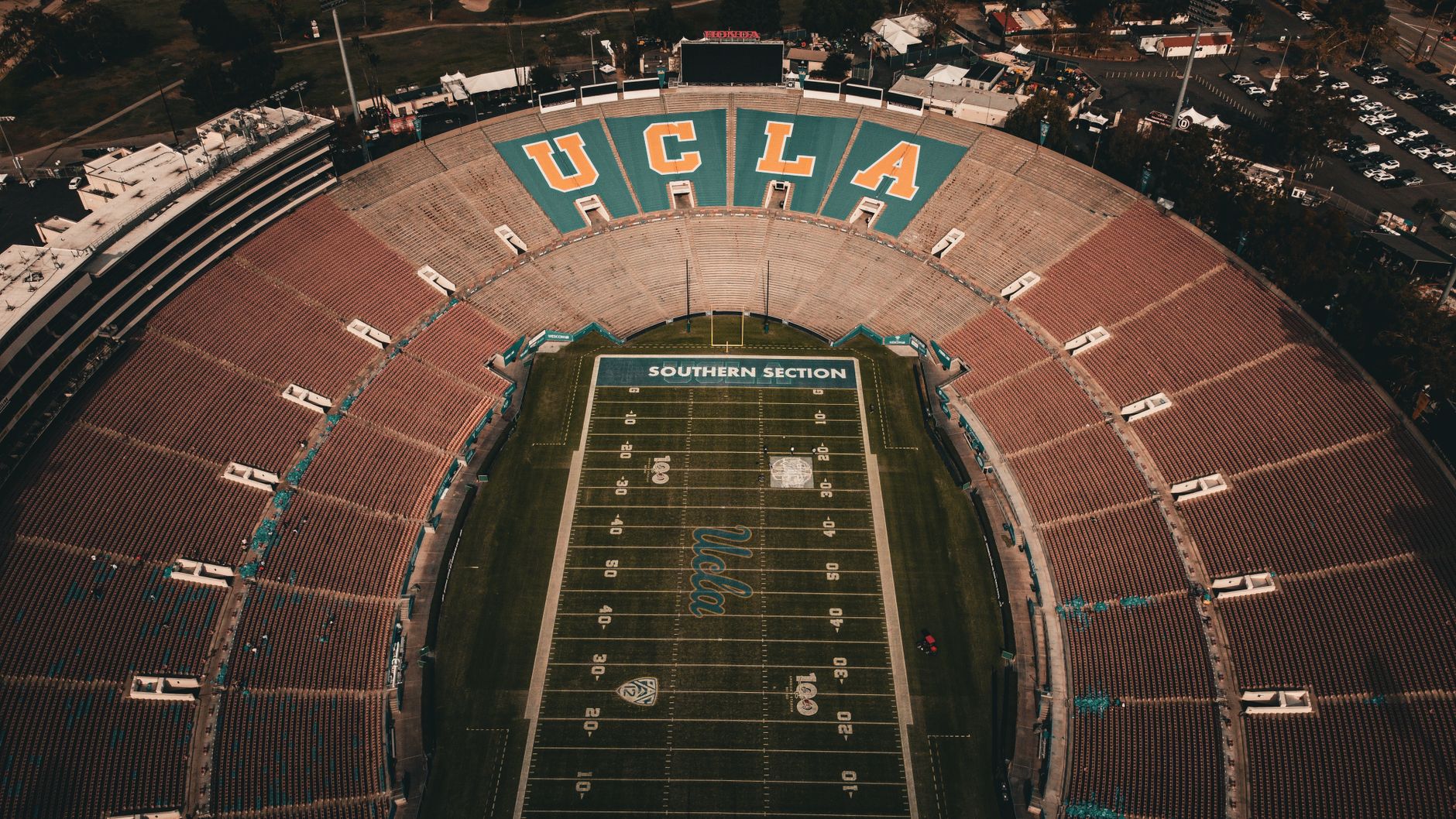
Photo by Caio Cezar on Pexels
Looking for a deeper dive into the numbers behind these pitfalls?
<a href="https://heyitsloulou.com
Thank you for reading.
Football Compass · Editorial Archive