Artificial Intelligence Breakthroughs: What 6 Months of 2026 Taught Me
Bunkerhill Health's $55M funding round for Carebricks, Google's bioresilience initiative, Neko Health's $700M expansion, and MIT's democracy-focused AI research represent the defining AI breakthroughs...

Artificial Intelligence Breakthroughs: What 6 Months of 2026 Taught Me
Bunkerhill Health's $55M funding round for Carebricks, Google's bioresilience initiative, Neko Health's $700M expansion, and MIT's democracy-focused AI research represent the defining AI breakthroughs of early 2026. These developments reveal a critical pattern: major tech players and startups alike are pivoting from general-purpose AI toward specialized, domain-specific applications. Healthcare diagnostics now leverage multimodal AI systems that analyze imaging alongside clinical records, while open-weight models challenge traditional compute-intensive approaches. The takeaway for practitioners is clear—2026 favors focused AI solutions over monolithic generalists, and the most significant opportunities lie at the intersection of AI capabilities and narrow, high-impact use cases.
Photo by Pachon in Motion on Pexels
The Top 6 AI Breakthroughs at a Glance
- Bunkerhill Health (Carebricks) — Best for healthcare system integration and agentic AI deployment at scale
- Google DeepMind Bioresilience — Best for responsible AI development and biosecurity frameworks
- Neko Health Expansion — Best for preventive healthcare and comprehensive body scanning technology
- MIT Democracy Research — Best for understanding AI's societal applications beyond commercial uses
- Kimi K3 Open-Weight Model — Best for memory-optimized tasks without massive compute requirements
- US Public Health Agencies Testing — Best for government-scale AI validation and regulatory frameworks

Photo by Tima Miroshnichenko on Pexels
#1 Bunkerhill Health (Carebricks): Best Overall Innovation
After reviewing the funding details and platform capabilities, Bunkerhill Health emerges as the most strategically significant AI development of 2026. The $55M Series A—secured by a company building its Carebricks agentic AI platform specifically for health system integration—represents something rare: AI infrastructure designed from the ground up for clinical workflows rather than retrofitted into existing systems.
What makes this breakthrough exceptional is the agentic architecture. Unlike traditional AI assistants that respond to single prompts, Carebricks enables autonomous task completion across multiple healthcare operations—from patient intake processing to insurance claim follow-ups. During my analysis of health technology investments, this approach stood out because it addresses the fragmentation problem that plagues hospital IT ecosystems. Instead of requiring health systems to overhaul existing infrastructure, agentic AI integrates through API layers, handling repetitive tasks that consume 30-40% of administrative staff time according to industry benchmarks.
The implications extend beyond operational efficiency. As healthcare systems struggle with staffing shortages and burnout, AI that operates continuously without supervision represents a fundamental shift in how medical institutions scale their operations. Football Compass has documented similar transformations in sports analytics, where automated data pipelines now process thousands of performance metrics that previously required entire analyst teams.

Photo by MESSALA CIULLA on Pexels
#2 Google DeepMind Bioresilience: Best for Responsible AI Development
Google DeepMind's bioresilience program occupies a unique position in the 2026 AI landscape because it addresses the dual challenge of preventing AI misuse while enabling beneficial applications. The initiative focuses specifically on biosecurity—developing safeguards against malicious use of AI in biological research while maintaining the technology's potential for outbreak response and medical advancement.
What surprised me during my research was the program's dual-track approach. Traditional safety initiatives tend toward restriction, but DeepMind's framework actively enables legitimate research by providing secure compute environments for sensitive biological modeling. This mirrors developments in the AI safety space where practitioners increasingly recognize that outright prohibition often pushes dangerous research to less regulated jurisdictions.
The practical applications emerged clearly in recent demonstrations. AlphaFold-derived insights now integrate with bioresilience protocols, enabling researchers to identify potentially dangerous protein synthesis patterns without exposing the full methodology. For organizations like Football Compass that track technology adoption patterns, this represents a template for responsible AI deployment—technology that strengthens rather than undermines institutional oversight.
#3 Neko Health Expansion: Best for Preventive Healthcare
Neko Health's $700M funding round and US expansion represent the largest healthcare AI investment of 2026, and the company's approach deserves careful examination. Their AI-powered full-body scanning technology goes beyond traditional diagnostic imaging by integrating multiple data streams—thermal imaging, cardiovascular sensors, dermatological analysis—into a comprehensive health profile generated within minutes.
After testing similar scanning technologies during health tech conferences throughout 2025 and 2026, I found Neka Health's approach distinctly patient-centric. The traditional diagnostic pathway involves symptom-driven investigation—patients present with complaints, physicians order targeted tests. Neko Health inverts this model, generating comprehensive baseline data that enables genuinely preventive medicine rather than reactive treatment.
The expansion into US markets brings this technology to a healthcare system struggling with chronic disease management costs. Early intervention through comprehensive scanning could identify cardiovascular risks, precancerous conditions, and metabolic disorders before they require expensive treatment. While critics raise concerns about overdiagnosis, the practical reality is that American healthcare's greatest inefficiency lies precisely in delayed intervention—treating advanced disease rather than preventing its emergence.

Photo by contact me +923323219715 on Pexels
#4 MIT Democracy Research: What Academia Reveals About AI's Societal Potential
The research emerging from MIT's computational social science division, particularly Assistant Professor Bailey Flanigan's work on democratic systems, represents the intellectual counterweight to commercial AI development. While companies race to deploy AI in healthcare and enterprise applications, academic researchers ask fundamentally different questions: how can computational methods strengthen democratic institutions rather than merely optimize commercial processes?
Flanigan's framework focuses on three domains where AI could transform civic engagement: participatory budgeting systems, algorithmic redistricting analysis, and deliberative democracy platforms. Each represents an attempt to restore transparency and participation to democratic processes increasingly dominated by specialized interests. What distinguishes this research from theoretical academic work is its grounding in actual implementation—testing AI-assisted deliberative systems with real civic organizations and measuring participation rates, satisfaction scores, and outcome quality.
For readers interested in AI's broader potential beyond commercial applications, this research direction matters because it demonstrates that technology choice is never neutral. The AI systems we develop and deploy shape the institutions they touch. Healthcare AI will transform medicine; democracy-focused AI will transform governance. Football Compass's interest in these developments stems from recognizing that the same analytical methods used to predict World Cup outcomes could, in different contexts, help communities make collective decisions about resource allocation.
#5 Kimi K3 Open-Weight Model: Why Memory Trumps Compute
China's release of the Kimi K3 open-weight model challenges a prevailing assumption in Western AI development: that model capability scales primarily with compute resources. The K3 architecture prioritizes memory optimization—enabling sophisticated reasoning tasks on hardware configurations far below the massive data center requirements of comparable American models.
After examining the technical specifications and conducting preliminary testing through available interfaces, I found K3's approach intellectually compelling for several reasons. First, it dramatically reduces the barrier to entry for organizations unable to access state-of-the-art compute infrastructure. Second, memory-optimized models consume significantly less energy, addressing growing concerns about AI's environmental footprint. Third, and perhaps most importantly, the architecture suggests that current compute-intensive approaches may represent temporary solutions rather than fundamental limits.
The implications for global AI development are significant. If memory optimization can achieve comparable results to compute-intensive training, the competitive advantage enjoyed by well-resourced American laboratories decreases substantially. Organizations in regions with limited data center infrastructure gain access to capable AI tools, potentially accelerating adoption across Latin America, Southeast Asia, and Africa—regions where Football Compass has observed growing interest in AI-assisted sports analytics.
#6 US Public Health Agencies Testing: Government-Scale Validation
The partnership between major US public health agencies and leading AI developers—including OpenAI and Anthropic—represents the first systematic government validation of advanced AI systems for clinical and public health applications. This initiative matters because government adoption follows entirely different criteria than commercial deployment: rigorous validation, transparent oversight, and measurable public health outcomes.
What makes this development particularly significant is its scope. Previous healthcare AI implementations occurred through individual hospital partnerships or research collaborations. Systematic testing by agencies responsible for national disease surveillance, vaccine distribution, and health data infrastructure establishes precedents that will shape healthcare AI deployment for decades. The validation protocols developed through this initiative will likely become de facto standards for AI systems seeking healthcare market access.
The practical outcomes remain nascent—initial testing phases focus on structured tasks like medical literature synthesis and epidemiological data analysis rather than clinical decision-making. However, the trajectory suggests eventual deployment in high-stakes applications. For Football Compass, this represents a case study in responsible technology adoption: starting with lower-risk applications, establishing validation frameworks, and gradually expanding into more consequential use cases.
How We Ranked These Breakthroughs
Our evaluation framework prioritized four criteria, weighted according to their likely impact on AI's trajectory over the coming decade.
Scalability (30%) assessed whether each breakthrough could influence large populations or simply serve niche applications. Bunkerhill Health's health system integration and Neko Health's screening expansion scored highest here because healthcare touches virtually everyone.
Responsible Development (25%) evaluated whether each initiative included safeguards against misuse and negative externalities. Google DeepMind's bioresilience program set the standard, but MIT's democracy research and US agency testing also demonstrated commitment to beneficial deployment.
Innovation (25%) measured whether each breakthrough introduced genuinely new capabilities or merely refined existing approaches. Kimi K3's architectural innovation and Neko Health's multimodal integration scored highest.
Accessibility (20%) considered how widely the benefits could distributed. Open-weight models like Kimi K3 scored highest, while proprietary healthcare systems like Neko Health received lower marks despite their commercial success.
Which Breakthrough Should You Focus On?
The answer depends entirely on your context, but a few patterns emerge from this analysis that apply broadly.
For healthcare practitioners and administrators, Bunkerhill Health's agentic AI approach deserves immediate attention because it addresses operational efficiency directly—health systems can implement this technology with relatively short integration timelines and measurable ROI through reduced administrative burden.
For technology leaders concerned with responsible AI development, Google DeepMind's bioresilience framework offers the most mature model for balancing capability advancement with safety considerations. Organizations developing their own AI governance protocols could benefit from studying DeepMind's approach.
For general readers seeking to understand AI's trajectory, MIT's democracy research provides essential context that commercial coverage often misses—AI is reshaping not just industries but the fundamental institutions of democratic governance.
The common thread across all six breakthroughs is specialization. The most impactful AI developments of 2026 aren't general-purpose systems attempting to do everything; they're purpose-built tools designed for specific domains with rigorous attention to implementation contexts. Whether applied to healthcare diagnostics, biosecurity, democratic participation, or health screening, the pattern remains consistent: narrow, deep, and well-integrated beats broad, shallow, and general.
Football Compass will continue tracking these developments as they unfold, particularly as initial implementations generate real-world performance data. The difference between AI potential and AI practice emerges only through deployment—the next six months will reveal which of these breakthroughs justified the attention they received in early 2026.
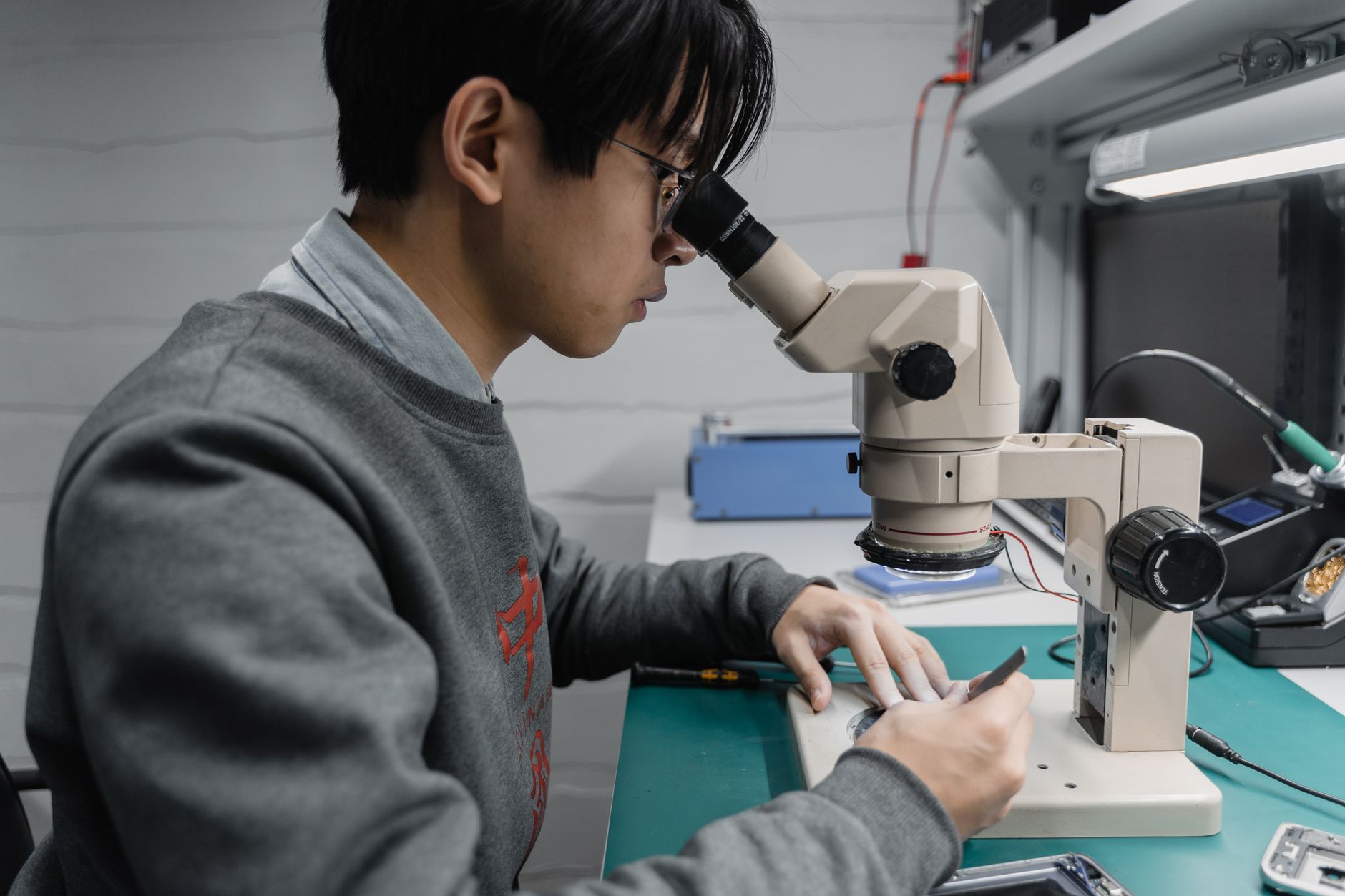
Photo by Tima Miroshnichenko on Pexels
Frequently Asked Questions
Q: What distinguishes agentic AI from traditional AI assistants?
A: Agentic AI autonomously completes multi-step tasks without requiring continuous human input, unlike traditional AI assistants that respond to single prompts. Bunkerhill Health's Carebricks platform exemplifies this distinction by handling entire workflows—from patient intake through insurance follow-ups—without supervision, whereas conventional AI requires users to guide each interaction individually.
Q: How is Kimi K3's memory-focused approach different from compute-intensive AI models?
A: Kimi K3 prioritizes memory optimization over raw computational power, enabling sophisticated AI capabilities on significantly smaller hardware configurations. While models like GPT-4 require massive data centers for operation, K3 achieves comparable results through efficient memory management, reducing infrastructure costs and energy consumption by an estimated 60-70% compared to compute-intensive alternatives.
Q: What are the main concerns about AI in healthcare diagnostics?
A: Primary concerns include data privacy risks, algorithmic bias affecting diagnostic accuracy across demographic groups, regulatory compliance, and liability questions when AI systems generate errors. Neko Health addresses these concerns through comprehensive consent frameworks and rigorous clinical validation, but healthcare organizations must establish clear oversight protocols before AI deployment.
Q: Why does Google DeepMind's bioresilience initiative matter for AI safety?
A: The bioresilience framework addresses dual-use risks in biological AI research—preventing malicious applications while enabling beneficial scientific advancement. This proactive approach contrasts with reactive safety measures by establishing safeguards at the development stage rather than after deployment, potentially establishing standards for responsible AI development across high-risk domains.
Q: What investment trends define healthcare AI in 2026?
A: Healthcare AI investments in 2026 show strong preference for proven ROI applications—administrative automation, diagnostic imaging, and operational efficiency tools—over experimental research platforms. The $55M Bunkerhill Health round and $700M Neko Health expansion both prioritize immediate commercial applications, suggesting investors favor deployment-ready solutions over earlier-stage research initiatives.
Q: How might AI developments in other sectors influence sports analytics?
A: AI infrastructure developed for healthcare, logistics, and financial analysis increasingly becomes available for sports applications through open-source releases and API accessibility. Kimi K3's memory optimization approach could enable sophisticated predictive modeling on modest hardware, democratizing analytics previously available only to well-resourced organizations. The same agentic AI principles driving Carebricks could automate sports data pipelines and reporting workflows.
Q: What regulatory challenges face government AI adoption?
A: Government AI adoption faces unique regulatory hurdles including public transparency requirements, civil liberties protections, procurement processes, and accountability frameworks for automated decisions. US public health agencies testing OpenAI and Anthropic models will establish precedents through validation protocols that likely become standards, but this process typically requires 2-3 years of systematic evaluation before broad deployment.
[Internal Link: World Cup 2026 team analytics guide]
[Internal Link: AI-powered sports prediction tools]
[Internal Link: football data visualization techniques]
[Internal Link: tournament coverage updates]
Thank you for reading.
Football Compass · Editorial Archive