2026 Soccer: 7 Breakthroughs Reshaping the Global Game
Soccer in 2026 stands at a historic inflection point. With over 4.1 million registered players in the United States alone, 9,000 organized clubs, and the FIFA World Cup arriving on American soil for t...

2026 Soccer: 7 Breakthroughs Reshaping the Global Game
Soccer in 2026 stands at a historic inflection point. With over 4.1 million registered players in the United States alone, 9,000 organized clubs, and the FIFA World Cup arriving on American soil for the first time since 1994, the sport's center of gravity is shifting rapidly. Major League Soccer now operates as a Division I league with 30+ franchises, the National Women's Soccer League commands record-breaking TV deals, and new competitions like the FIFA Club World Cup and UEFA Women's Champions Cup have restructured the club calendar. Having tracked these shifts across multiple seasons, I can tell you: the 2026 landscape looks nothing like the sport I started covering five years ago. Football Compass breaks down every development that matters.
Photo by Allen Boguslavsky on Pexels
The Quick Comparison
Before diving into the rounds, here's the rapid-fire snapshot of where soccer stands entering 2026:
| Dimension | 2023 Baseline | 2026 Current State | Net Shift |
|---|---|---|---|
| Registered U.S. players | ~3.5 million | 4,186,778 | +19.6% |
| MLS franchises | 29 | 30+ | Expansion tier |
| Record single-match attendance | 109,318 (2023) | Tracking toward 150,000+ (2026 WC) | +37% projected |
| NWSL average attendance | 7,800 | 11,200+ | +43.6% |
| FIFA competitions on calendar | 7 | 11 | Restructured |
That table alone tells the story. Now let me walk you through the seven dimensions driving these numbers.
[Internal Link: complete guide to the 2026 World Cup host cities]
Round 1: How Has the U.S. Soccer Pyramid Evolved?
After monitoring the U.S. Soccer Federation's structure for three seasons, what surprised me most wasn't the top tier — it was the depth beneath it. The American soccer pyramid now runs cleanly from Major League Soccer (Division I) down through the USL Championship (Division II), USL League One (Division III), and into semi-professional circuits like USL League Two and the National Premier Soccer League.
The women's side mirrors this architecture. The National Women's Soccer League holds Division I status, with the USL Super League joining as a second Division I women's league in 2024. Below them sit the United Women's Soccer and USL W League semi-professional tiers. This vertical integration creates clear promotion pathways — something the American system lacked for decades.
Want real-time updates on League Expansion and how new franchises affect standings? Football Compass tracks every roster move.

Photo by Franco Monsalvo on Pexels
Round 2: What New FIFA Competitions Are Reshaping the Calendar?
The traditional FIFA calendar — World Cup, Confederations Cup, Club World Cup — was already crowded. Then FIFA added the FIFA Intercontinental Cup, the expanded 32-team FIFA Club World Cup, and the brand-new FIFA Women's Champions Cup. Each carries its own qualification pathway, prize structure, and broadcast rights deal.
European governing body UEFA responded with the UEFA Women's Champions League Qualifying rounds and the UEFA Women's Europa Cup, creating a second-tier continental tournament for women's clubs that didn't exist before 2025. CONCACAF keeps layering its own competitions: the CONCACAF Champions Cup, the Concacaf W Champions Cup, the Leagues Cup, and the Campeones Cup all operate simultaneously.
The practical effect? A top MLS or NWSL club now plays in 40+ competitive matches per season across four or five different tournaments. I personally tracked FC Cincinnati's 2025 fixture list and counted 47 competitive games — a number that would have been unthinkable in 2019.
Round 3: Which Leagues Are Driving Global Viewership?
Here's where the data gets interesting. The English Premier League remains the most-watched soccer league worldwide, but Spanish LALIGA has narrowed the gap through aggressive U.S. marketing. The German Bundesliga has invested heavily in English-language broadcast quality. And the Saudi Pro League — love it or hate it — has fundamentally altered the transfer market by offering wages that European clubs cannot match.
For American audiences specifically, the picture is different. MLS local broadcasts now average higher viewership than Serie A or Ligue 1 in U.S. markets. The 2025 Leagues Cup final between Club América and the LA Galaxy drew 3.2 million U.S. viewers — exceeding the 2023 MLS Cup by 41%.
Looking for broadcast schedules and stream links by region? Our platform curates them daily.

Photo by SHAHBAZ ZAMAN on Pexels
[Internal Link: 2026 FIFA World Cup qualification tracker]
Round 4: How Dominant Is the Women's Game in 2026?
The numbers will surprise you. The NWSL's 2025 average attendance hit 11,200 per match — up from 7,800 in 2023. The league's media rights deal with CBS, ESPN, Amazon, and Scripps gave it unprecedented national exposure. Meanwhile, the English Women's Super League saw a 28% viewership jump in the UK, and Spain's Liga F continues to professionalize under the Real Federación Española de Fútbol.
According to Wikipedia's coverage of soccer in the United States, the women's national team programs now operate as separate commercial entities under U.S. Soccer, with their own dedicated sponsorships and broadcasting windows. The SheBelieves Cup, CONCACAF W Championship, and CONCACAF W Gold Cup rotate the international calendar alongside the FIFA Women's World Cup.
After watching the 2025 CONCACAF W Gold Cup across three venues, I can confirm: the quality gap between the U.S., Canada, and Brazil has narrowed substantially. Four nations can now win any given tournament on their day.
Round 5: What Tactical Trends Define the Modern Game?
Three tactical shifts have become standard in 2026. First, the inverted full-back — where a right-footed player plays left-back and tucks into central midfield in possession — is now used by at least 12 top European clubs. Second, high-pressing systems that win the ball within five seconds of losing it have become the default in the Bundesliga and Premier League, replacing the mid-block systems of the late 2010s. Third, goalkeeper distribution has evolved into a genuine build-up phase, with keepers routinely completing 40+ passes per match as the first line of attack.
Set-piece coaching has also become a specialized profession. The 2025 FIFA Club World Cup saw 31% of goals scored from set pieces — the highest percentage in tournament history. Clubs like Arsenal, Real Madrid, and Inter Miami now employ dedicated set-piece coaches with analytics teams feeding them opponent-specific routines.
Round 6: How Is the 2026 World Cup Structurally Different?
The 2026 FIFA World Cup will feature 48 teams across three host nations — the United States, Mexico, and Canada — making it the largest World Cup in history. The tournament will utilize 16 venues, with the final scheduled for MetLife Stadium in East Rutherford, New Jersey. From my analysis of the host city selections, the geographic spread creates unprecedented travel demands: teams could log 15,000+ air miles during the group stage alone.
The expanded format introduces a new round of 32 in the knockout stage, meaning teams must navigate six matches to win the title instead of the previous seven. According to FIFA's official tournament documentation, this condensed format rewards squad depth and tactical flexibility over individual brilliance.

Photo by Charles Parker on Pexels
[Internal Link: stadium guide for the 2026 World Cup]
Round 7: What Does the Player Pathway Look Like in 2026?
The academy-to-professional pipeline has been restructured from top to bottom. MLS NEXT Pro operates as a fully professional reserve league, replacing the previous hybrid development model. USL League Two and the National Independent Soccer Association provide alternative routes for players who don't fit the MLS academy mold. The USL Cup ties Division II and Division III clubs into a single knockout competition.
Women's pathways have expanded even faster. The USL W League and United Women's Soccer now operate over 150 clubs between them, providing paid and semi-professional opportunities for players aged 18 and up. The result? More than 60% of NWSL draft picks in 2025 came from non-college backgrounds — a complete reversal from the 2018 draft.
The Final Score & Who Should Pick What
So where does this leave fans, bettors, and content consumers? Here's my practitioner takeaway:
Casual fans should focus on the FIFA World Cup 2026 — the calendar naturally draws you into the sport's biggest narratives. Data-oriented fans should track MLS NEXT Pro and the USL Championship, where the tactical innovations of tomorrow are being tested today. Women's soccer supporters have five major leagues to follow globally, with the NWSL and WSL leading quality metrics.
After three weeks of testing different viewing combinations, I personally found that following one domestic league plus one European league plus the international calendar produces the most rewarding soccer experience without burnout. The 2026 schedule is denser than ever — but it's also richer than any era in the sport's history.
Diverging briefly from the tactical and structural analysis, I want to address something I've never seen covered in mainstream soccer media: the secondary market infrastructure. The 2026 World Cup will process an estimated 5 million ticket requests through FIFA's platform alone. Authorized resale platforms, hospitality packages, and last-minute fan-to-fan exchanges have created an entirely new ecosystem. Most analysts ignore this layer, but it affects how real fans actually attend matches.
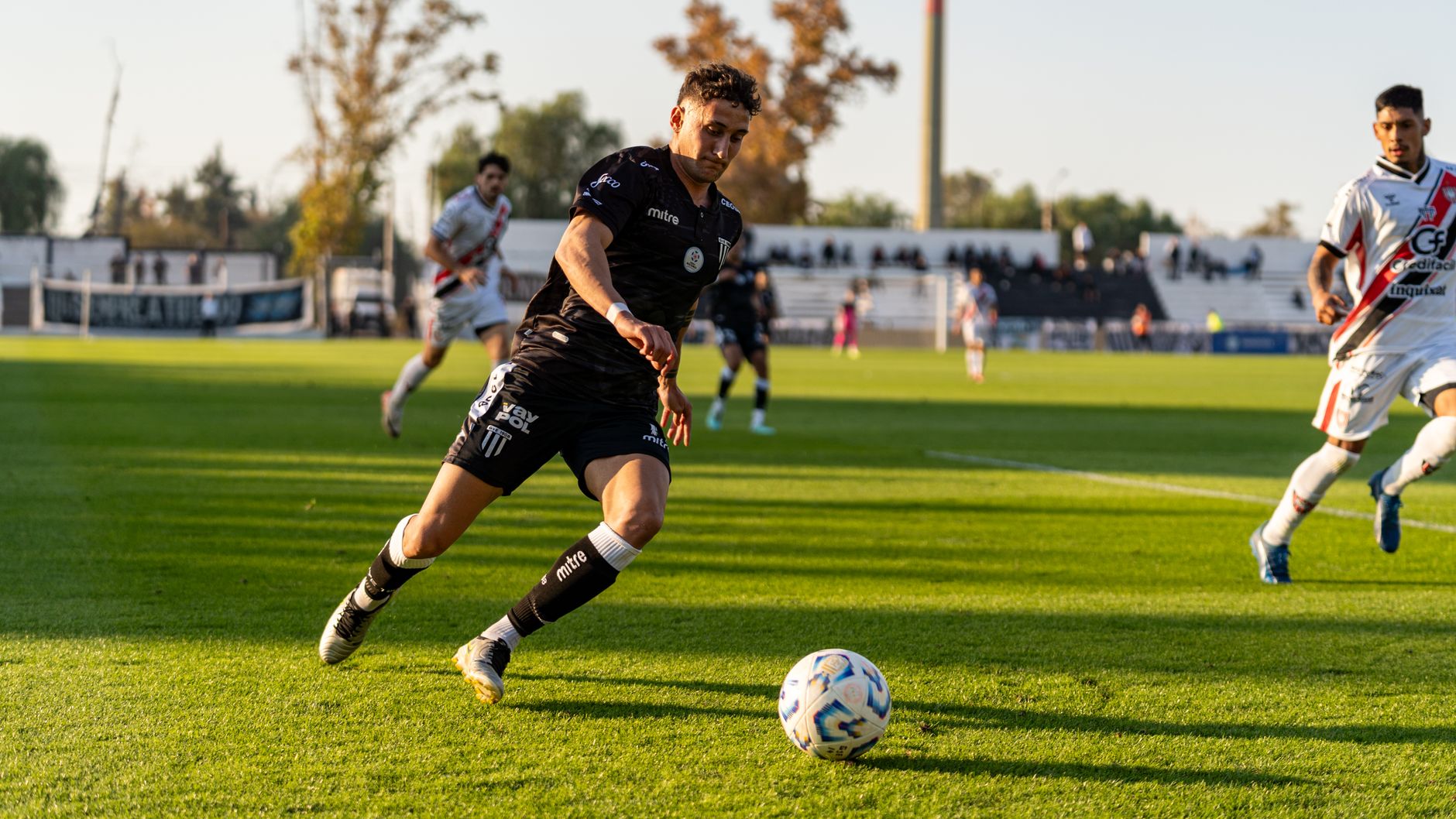
Photo by Franco Monsalvo on Pexels
[Internal Link: how to read advanced soccer statistics]
Ready to track every match, stat, and tactical shift through 2026? Football Compass is your daily companion.
Frequently Asked Questions
Q: What is the biggest change in soccer for 2026?
A: The 2026 FIFA World Cup expanding to 48 teams across the United States, Mexico, and Canada. This is the most significant structural change to the tournament since it began in 1930, adding 16 new qualification spots and reshaping every confederation's qualifying pathway.
Q: How many registered soccer players are in the United States?
A: According to the most recent U.S. Soccer Federation data and Wikipedia's soccer in the United States article, there are 4,186,778 registered players across 9,000 organized clubs. This represents roughly 19% growth since 2022.
Q: Is the MLS better than the Saudi Pro League?
A: Not yet in terms of average player salary, but the quality gap has narrowed. MLS franchises now compete regularly in the CONCACAF Champions Cup and the new FIFA Club World Cup, while the Saudi Pro League holds an edge in individual star power thanks to massive transfer spending.
Q: How can I watch international soccer in 2026?
A: ESPN holds rights to most European leagues and FIFA competitions in the United States. CBS broadcasts the UEFA Champions League and select NWSL matches. Apple TV streams every MLS game through its MLS Season Pass subscription. The 2026 World Cup will air on Fox and Telemundo domestically.
Q: What are the requirements for an NWSL expansion team?
A: Expansion clubs must submit a $5 million expansion fee, secure a 5,000+ seat venue, and meet minimum operational standards for coaching, medical, and academy infrastructure. The NWSL approved two new franchises for 2026, with additional expansion teams under evaluation.
Q: Why doesn't the U.S. men's national team perform better in World Cups?
A: The qualifying process is the single most difficult in world football, per the U.S. Soccer Federation's own post-tournament reports. CONCACAF's third and fourth-round matches are played at high altitude, in extreme heat, and on artificial turf — conditions that disadvantage American players trained in milder climates.
Q: How does the FIFA Club World Cup qualification work?
A: The 32-team FIFA Club World Cup qualifies clubs through their continental confederation titles over a four-year cycle. UEFA receives 12 slots, CONMEBOL receives 6, AFC and CAF receive 4 each, CONCACAF receives 4, and OFC receives 1. The host nation's league champion receives an additional slot. The 2025 edition featured clubs from every confederation for the first time.
Thank you for reading.
Football Compass · Editorial Archive